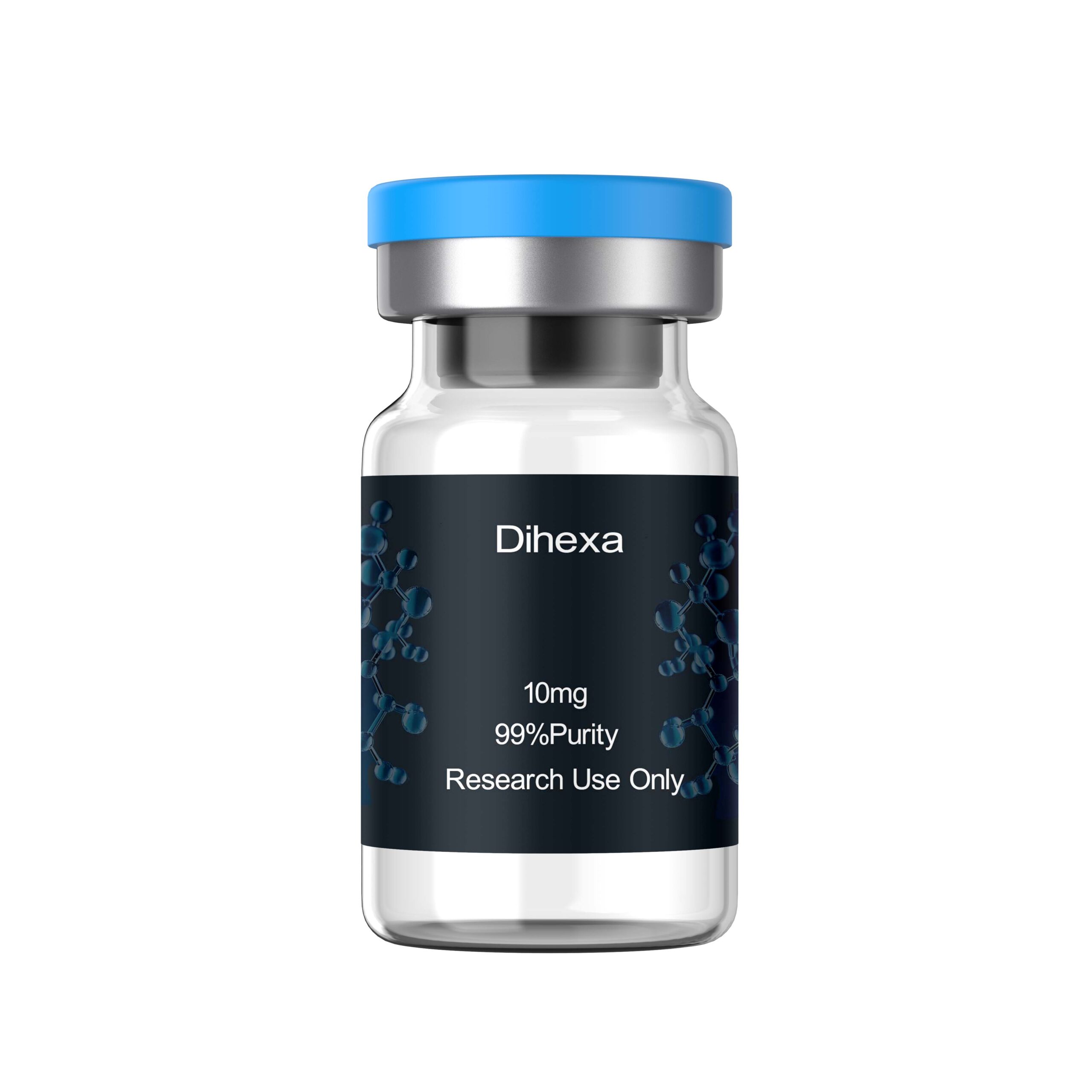
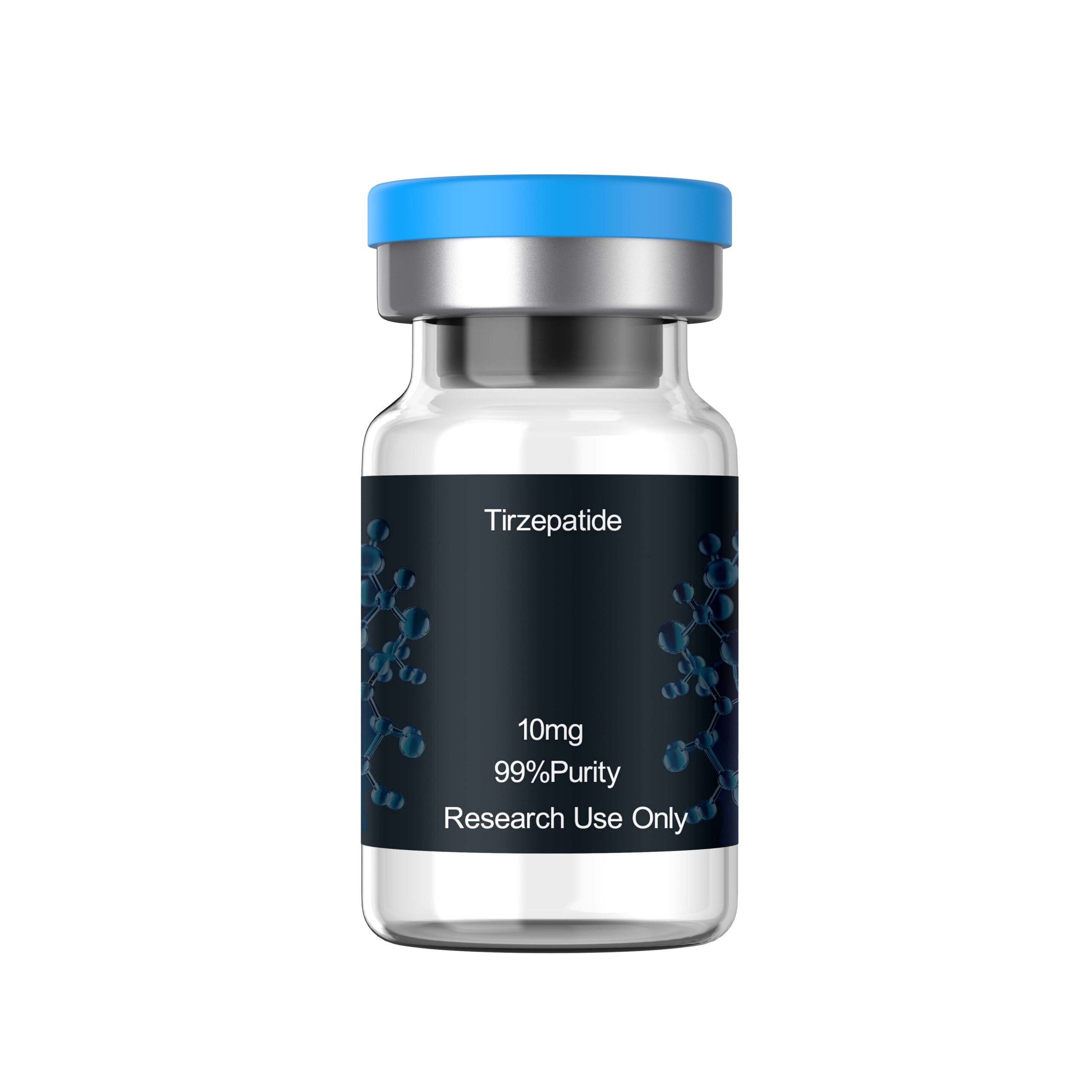
Description of Dihexa Peptide
The medicinal substance is commonly known as Dihexa. The Research code name for Dihexa is PNB-0408 which is not yet officially approved for both commercial and clinical use. In research lab experiments, this peptide is referred to as Dihexa. Dihexa is a synthetic peptide analog identified as angiotensin IV and hence termed as investigational peptide.
Drug Class: Orally Bioavailable Blood-Brain Barrier Permeable Neurotrophic Peptide, HGF/c-Met Receptor Allosteric Potentiator.
Chemical Structure: Dihexa is a modified synthetically produced hexapeptide with the chemical formula Hexanoyl-Tyr-Ile-Ahx-NH2 whose CAS number is 1401708-83-5. Due to its low lipophilic weight, Dihexa is different from other ordinary peptides in being orally bioavailable and enabling penetration through the blood-brain barrier. It is stable in body environments due to its property to resist quick enzymatic degradation and ensuring continuous working of active substance for a long time period in the body.
- The Method of Working
1.1 Activation of Receptors: Dihexa does not initiate any cell receptor activations like any ordinary agonist. Dihexa behaves as an allosteric potentiator and can attach to the hepatocyte growth factor (HGF). Because of this attachment, the HGF binding to the c-Met receptor is improved, stimulating signals from HGF/c-Met but at the same time avoiding the activation process of receptor activity.By enhancing HGF/c-Met signal transduction, it drives the activation of the downstream PI3K/AKT/mTOR pathways that promote synaptic formation, increase the density of dendritic spines, and facilitate the survival and repair of neurons. Despite being mainly a neurotropic agent, it has supplementary metabolic advantages: Increases energetics in the central nervous system, reduces chronic neuroinflammation associated with metabolic disorders, and corrects neural dysfunction caused by prolonged insulin resistance. Moreover, it reduces the impact of neuronal injury provoked by the hypoxia associated with disturbed sleep breathing, and helps maintain metabolic homeostasis in different obesity and diabetes models.
Compliance & Research Disclaimer
Dihexa Peptide is for research use only and academic experimental purposes. It is not registered as a pharmaceutical drug, dietary supplement or an over-the-counter medicine and has no clinical use approval from the FDA, EMA or other regional medical regulatory body. The product cannot be used for human clinical diagnosis, treatment of disease, oral or intravenous administration as well as commercial off-label usage. All of the product details and research data is academic in nature and not intended as medical advice or to be construed as therapeutic claims. Local laws, institutional laboratory-management requirements, and ethical-research standards must be followed by all purchasers and researchers. We shall not be liable for any unauthorized illegal use, improper operation or non-research application of the product.
- Indications and use (Evidence Based)
Research on Dihexa has been strictly restricted to preclinical scientific use since there is no FDA-approved clinical application on the human population.
Research related to type 2 diabetes: It is used in preliminary studies related to cognitive impairment traits of diabetes and metabolic problems related to nerve cells in order to measure its effectiveness in treating diabetes provoked neural problems.
- Research on chronic obesity: It is used in experiments connected with decreased inflammation and metabolic disorders in obese people.
- Research on OSA: It is used in research on the damages done to neuronal cellsCore Neurological Research: This research primarily concerns the treatment of neurodegenerative diseases, improvement of cognitive functions, and recovery of traumatic brain injuries. This research can also be helpful in neurotrophic or neuroregenerative studies.
- Dosage & Administration- (Standards of Research Lab)
3.1 Route and frequency
Laboratories have the option to administer Dihexa through various routes, such as oral administration, IP injection, and SC injection. The fact that oral bioavailability is high in the case of Dihexa means that oral administration is most appropriate in the case of long-term in vivo studies using this substance to produce reliable results. The general timing with which this peptide needs to be administered is once a day. However, it should be noted that in the case of acute neuroprotective studies, single dose or intermittent dosing protocols can be used.
3.2 Titration Schedule
In the case of preclinical on animal studies, the initial low dose is approximately 0.5-1 mg/kg for effectiveness assessment. The effective dose would be 2-5 mg/kg, which produces stable effects in terms of synaptic repair and metabolism improvement. The maximum allowable dose would be considered to be 10 mg/kg in order to mitigate excessive signaling activity due to HGF/c-Met activation and risk of abnormal tissue proliferation. There are currently no human dose titrating standards due to the research nature of this product.
3.3 Missed Dose Management
When conducting standardized research, the missed doses cannot be compensated for. Researchers should keep tracking the time when the dose is missed and make corresponding adjustments.
- Dosage forms
Main forms of Dihexa used in the lab are lyophilized sterile powder for injection and powder for oral administration. Lyophilized powder should be reconstituted with sterile solvent prior to injection while the oral powder can be dissolved directly with water prior to administration. All dosage forms are designed for laboratory only so there are no commercially available tablets or capsules.
- FDA Regulatory Status
According to the U.S. Food and Drug Administration Dihexa has not been approved for medical treatment, cosmetic purposes, or human use at its pace. Due to the regulatory circumstances, this peptide is classified as research only. As a result, only academic institutions, approved laboratories, and preclinical researchers can use the peptide without any legal action taken against them.
10 Common FAQs About Peptides
- What is a peptide?
Answer: A peptide is a short chain of amino acids linked together by peptide bonds. It is smaller and more easily absorbed by the human body than proteins, serving as a fundamental functional substance in biological organisms.
- What is the difference between peptides and proteins?
Answer: The core difference lies in molecular length and structure. Peptides are short amino acid chains (usually consisting of 2–50 amino acids), while proteins are long, complex amino acid chains with stable three-dimensional structures. Peptides have stronger permeability and faster absorption efficiency than proteins.
- What are the main types of peptides?
Answer: Peptides are mainly classified by the number of amino acids: dipeptides, tripeptides, oligopeptides (2–10 amino acids) and polypeptides (10–50 amino acids). They can also be divided into natural peptides and synthetic peptides according to their sources.
- What are the biological functions of peptides?
Answer: Peptides have diverse biological activities, including regulating human metabolism, improving immune function, promoting cell repair, anti-oxidation, anti-aging, and adjusting hormone levels. They act as key signaling molecules and regulatory factors in the body.
- Are peptides safe for human use?
Answer: Most natural and medically approved synthetic peptides are highly safe. They have small molecular weight, low toxicity, and will not accumulate in the body. However, unstandardized high-dose peptide products or impure synthetic peptides may cause mild discomfort.
- What are the common applications of peptides?
Answer: Peptides are widely used in multiple fields. In biomedicine, they are made into therapeutic drugs for endocrine and immune diseases; in cosmetics, they are used for anti-aging and skin repair; in health products, they serve as nutritional supplements to improve physical fitness.
- Can the human body absorb exogenous peptides directly?
Answer: Yes. Unlike proteins that need to be decomposed before absorption, small-molecule peptides can be directly absorbed by the intestinal tract and skin with high absorption rate and utilization efficiency, and can quickly exert biological effects in the body.
- What are synthetic peptides used for?
Answer: Synthetic peptides are artificially customized amino acid chains. They are mainly used for scientific research, clinical drug development, targeted skin care ingredient production, and precise nutritional supplementation, with higher purity and targeted activity than some natural peptides.
- Do peptide products have side effects?
Answer: Standard peptide products have almost no obvious side effects for most people. Individual groups may experience mild gastrointestinal discomfort or skin sensitivity due to physical differences or excessive intake. Long-term excessive use may disrupt the body’s metabolic balance.
- What is the difference between collagen peptides and ordinary peptides?
Answer: Collagen peptides are a specific type of functional peptide extracted and decomposed from collagen, mainly targeting skin moisturizing, anti-wrinkle and joint care. Ordinary peptides cover a broader range with more diverse regulatory functions including immunity and metabolism, while collagen peptides have more focused skincare and anti-aging effects.
All of our fiber optic cable package are with export wooden drum. Indoor FTTH cable’s wooden dimension is 50x50x32cm, delivery length 3km/drum, Outdoor fiber optic cable’s wooden dimension is 110cm*110cm*70cm, 0.85CBM, can be load about 33 drums for a 20GP.Also accept custom cable drum from customers. welcome to contact us!
GYTS Direct Burial Single Armored Double Sheath Fiber Optic Cable
GYTS Fiber Optic Cable Picture
Shipping Choice |
| Shipping method | Courier | Shipping Time |
| Express Shipping | UPS | 5-15 DAY |
| Fedex | 5-15 DAY |
| Dedicated line | USPS | 7-15 DAY |
| Fedex | 7-15 DAY |
| DDP | | 10-20 DAY |