Produkteinführung
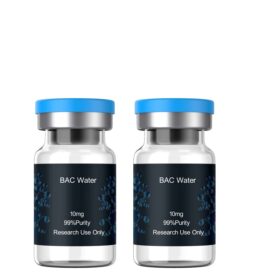
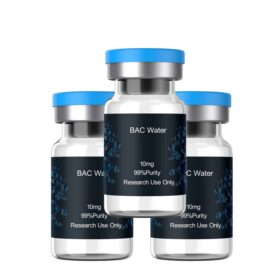
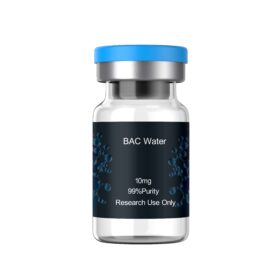
BAC Water for Peptides, or Bacteriostatic Water for Peptide Reconstitution, is a laboratory-synthesized agent designed to dissolve and dilute synthetic research peptides at a high-purity level. This is different than plain distilled water or regular sterile water, as this special type of solvent contains a low safe amount of benzyl alcohol to serve as a bacteriostatic preservative to prevent bacterial and microbial growth from occurring in reconstituted peptide solutions. Aimed at laboratory in vitro research applications, it preserves the biochemical stability and biological activity of sensitive peptide extracts preventing their fast degradation, contamination and solution spoilage after being reconstituted. BAC water is purified and sterile, with no endotoxin, ultra-low impurities level and stable pH. Ideal support reagent for all lyophilized peptide products, with consistent experimental results and reproducible batch-to-batch performance in biomedical research.
Hintergrund der Produktforschung
Specialized bacteriostatic water for peptide research was developed from the limitations inherent with traditional reconstitution solvents in biomedical experiments. Traditional laboratory methods tend to dissolve lyophilized peptides with sterile normal saline or pure water, but can neither inhibit the growth of bacteria nor prevent subsequent peptide degradation during storage. This has considerably impacted the in vitro cell experiments and long-term animal studies in vivo. To address this issue, BAC water — or Benzyl Alcohol in an ultra-pure steriled water solution containing a small amount of pharmaceutical-grade benzyl alcohol — was developed as a peptide stabilizer that prevents microbial growth while preserving peptide activity. Eventually enhanced through rounds of experimental confirmation, BAC Water is now used as the global standard solvent for peptide resuspension, making it successful across laboratories in the world to facilitate standardized storage and preparation for peptides.
Einhaltung & Haftungsausschluss für Forschung
This is a BAC Water for Peptides intended specifically for research and academic experiments in scientific laboratories only. Non-pharmaceuticals, non-medicinal solvent or topical raw materials and has not been approved for clinical use by the FDA, EMA or any regional medical regulatory body. The drug is not allowed for human injection, oral use, clinical treatment or commercial medical use. The product is only used in laboratory peptide reconstitution, Preparation of scientific solution All product descriptions are intended for academic reference use only. These are subordinate materials, meaning that buyers and researchers must comply with local laws and institutional laboratory management regulations. We hold no responsibility for any unauthorized non-research use and/or improper handling of the product.
Laboranwendungen
BAC Water for Peptides is a wide-spectrum supporting reagent that acts as a universal stabilization solution enabling various peptide-centered biomedical discoveries. Mainly based on its application in the protected rehydration of all lyophilized synthetic peptides (metabolic peptide, neuroactive peptide and anti-aging peptide reagents) to protect Peptide molecular structure from damage during dissolution. Zweite, it also provides short-term low-temperature storage of dissolved peptide products after reconstitution, thus prolonging the useful working time of experimental samples and preventing large quantities of peptides from being discarded unnecessarily following solvation. Thirdly, it is commonly used in in vitro cell experiments and the research of cancer animal models for providing blood contamination-free solvent conditions to ensure that peptides function exerting stable activities and trustworthy experimental data. It also acts as a solvent for laboratory solution diluent, experimental buffer preparation and consistent peptide sample set up for the study of pharmacological/physiological mechanisms.
Qualitätsstandards
BAC Water for Peptides conforms to international standards and is subjected to biochemical reagent specifications for laboratory use. The product is produced by multi-stage ultrafiltration, reverse osmosis and sterile high temperature sterilization technology to achieve ultra-high purity, zero particulate impurities and microbial residues. The content of benzyl alcohol is precisely controlled in the laboratory safety standard range to achieve bacteriostatic effect without affecting peptide biological activity or experimental results. Microbial limit testing, endotoxin detection, pH value verification and purity assay are made for each batch. Products are packaged in GMP-easy-clean workshops with sealed sterile packaging to prevent contamination of their products. We provide complete batch-specific COA quality inspection reports to ensure full compliance with your high-standard peptide research requirements.
Einhaltung & Haftungsausschluss für Forschung
This is a BAC Water for Peptides intended specifically for research and academic experiments in scientific laboratories only. Non-pharmaceuticals, non-medicinal solvent or topical raw materials and has not been approved for clinical use by the FDA, EMA or any regional medical regulatory body. The drug is not allowed for human injection, oral use, clinical treatment or commercial medical use. The product is only used in laboratory peptide reconstitution, Preparation of scientific solution All product descriptions are intended for academic reference use only. These are subordinate materials, meaning that buyers and researchers must comply with local laws and institutional laboratory management regulations. We hold no responsibility for any unauthorized non-research use and/or improper handling of the product.
Häufig gestellte Fragen (FAQs)
Q1: Why BAC Water and not easy sterile water for peptides?
A1: Ordinarily, the regular sterile water will not act as a bacteriostatic function to allow additional contamination and degradation of peptide decomposition. BAC Water includes safe benzyl alcohol, which inhibits bacteria while stabilizing reconstituted peptide solutions and extending the time frame in which experimental activity can occur to yield reliable data on research.
Q2: How should BAC Water be stored?
A2: How do you store the BAC Water?A2: After being sealed, it should be stored away from light at room temperature in a cool dry. Keep away from excessive temperature and sunlight. Once opened, seal thoroughly and sterily to prevent microorganism contamination.
Q3: What substances research peptides are built in BAC Water?
A3: Ja. All common synthetic research peptides are soluble in our laboratory standard-grade BAC Water (batch tested to be free from contaminants) thus making it ideal for use in cell assays and animal models.
Q4: Is BAC Water is for medical or clinical use in humans?
A4: NEIN. Laboratory research solvent only, professional grade. Not for human injection or event clinical therapy and frequent treatment nevertheless allow academic lab experimentation alone.
10 Häufig gestellte Fragen zu Peptiden
- Was ist ein Peptid??
Antwort: Ein Peptid ist eine kurze Kette von Aminosäuren, die durch Peptidbindungen miteinander verbunden sind. Es ist kleiner und wird vom menschlichen Körper leichter aufgenommen als Proteine, dient als grundlegende funktionelle Substanz in biologischen Organismen.
- Was ist der Unterschied zwischen Peptiden und Proteinen??
Antwort: Der Hauptunterschied liegt in der Moleküllänge und -struktur. Peptide sind kurze Aminosäureketten (besteht normalerweise aus 2–50 Aminosäuren), während Proteine lang sind, komplexe Aminosäureketten mit stabilen dreidimensionalen Strukturen. Peptide haben eine stärkere Permeabilität und eine schnellere Absorptionseffizienz als Proteine.
- Was sind die wichtigsten Arten von Peptiden??
Antwort: Peptide werden hauptsächlich nach der Anzahl der Aminosäuren klassifiziert: Dipeptide, Tripeptide, Oligopeptide (2–10 Aminosäuren) und Polypeptide (10–50 Aminosäuren). Sie können entsprechend ihrer Herkunft auch in natürliche Peptide und synthetische Peptide unterteilt werden.
- Welche biologischen Funktionen haben Peptide??
Antwort: Peptide haben vielfältige biologische Aktivitäten, einschließlich der Regulierung des menschlichen Stoffwechsels, Verbesserung der Immunfunktion, Förderung der Zellreparatur, Anti-Oxidation, Anti-Aging, und Anpassung des Hormonspiegels. Sie fungieren als wichtige Signalmoleküle und regulatorische Faktoren im Körper.
- Sind Peptide für den menschlichen Gebrauch sicher??
Antwort: Die meisten natürlichen und medizinisch zugelassenen synthetischen Peptide sind äußerst sicher. Sie haben ein geringes Molekulargewicht, geringe Toxizität, und reichert sich nicht im Körper an. Jedoch, Nicht standardisierte hochdosierte Peptidprodukte oder unreine synthetische Peptide können leichte Beschwerden verursachen.
- Was sind die häufigsten Anwendungen von Peptiden??
Antwort: Peptide werden in zahlreichen Bereichen häufig eingesetzt. In der Biomedizin, Sie werden zu therapeutischen Arzneimitteln gegen endokrine und Immunerkrankungen verarbeitet; in der Kosmetik, Sie werden zum Anti-Aging und zur Hautreparatur eingesetzt; bei Gesundheitsprodukten, Sie dienen als Nahrungsergänzungsmittel zur Verbesserung der körperlichen Fitness.
- Kann der menschliche Körper exogene Peptide direkt aufnehmen??
Antwort: Ja. Im Gegensatz zu Proteinen, die vor der Absorption zersetzt werden müssen, Kleinmolekulare Peptide können mit hoher Absorptionsrate und Verwertungseffizienz direkt vom Darmtrakt und der Haut absorbiert werden, und kann schnell biologische Wirkungen im Körper entfalten.
- Wofür werden synthetische Peptide verwendet??
Antwort: Synthetische Peptide sind künstlich angepasste Aminosäureketten. Sie werden hauptsächlich für wissenschaftliche Forschung verwendet, klinische Arzneimittelentwicklung, gezielte Produktion von Hautpflegewirkstoffen, und präzise Nahrungsergänzung, mit höherer Reinheit und gezielter Aktivität als einige natürliche Peptide.
- Haben Peptidprodukte Nebenwirkungen??
Antwort: Standard-Peptidprodukte haben für die meisten Menschen fast keine offensichtlichen Nebenwirkungen. Bei einzelnen Gruppen kann es aufgrund körperlicher Unterschiede oder übermäßiger Einnahme zu leichten Magen-Darm-Beschwerden oder Hautempfindlichkeit kommen. Langfristiger übermäßiger Konsum kann das Stoffwechselgleichgewicht des Körpers stören.
- Was ist der Unterschied zwischen Kollagenpeptiden und gewöhnlichen Peptiden??
Antwort: Kollagenpeptide sind eine spezielle Art von funktionellen Peptiden, die aus Kollagen extrahiert und abgebaut werden, Hauptziel ist die Befeuchtung der Haut, Anti-Falten- und Gelenkpflege. Gewöhnliche Peptide decken ein breiteres Spektrum mit vielfältigeren regulatorischen Funktionen ab, einschließlich Immunität und Stoffwechsel, während Kollagenpeptide eine gezieltere Hautpflege- und Anti-Aging-Wirkung haben.
Alle unsere Glasfaserkabelpakete sind mit einer Export-Holztrommel ausgestattet. Die Holzabmessungen des FTTH-Kabels für den Innenbereich betragen 50 x 50 x 32 cm, Lieferlänge 3 km/Trommel, Die Holzabmessungen des Glasfaserkabels für den Außenbereich betragen 110 cm x 110 cm x 70 cm, 0.85CBM, kann ca. geladen werden 33 Trommeln für 20 GP. Akzeptieren Sie auch kundenspezifische Kabeltrommeln von Kunden. Nehmen Sie gerne Kontakt mit uns auf!
GYTS Direct Burial Einfach gepanzertes Glasfaserkabel mit Doppelmantel
GYTS-Glasfaserkabelbild
Versandauswahl |
| Versandart | Kurier | Lieferzeit |
| Expressversand | UPS | 5-15 TAG |
| Fedex | 5-15 TAG |
| Eigene Leitung | USPS | 7-15 TAG |
| Fedex | 7-15 TAG |
| DDP | | 10-20 TAG |
 Powerae.com