Produkteinführung
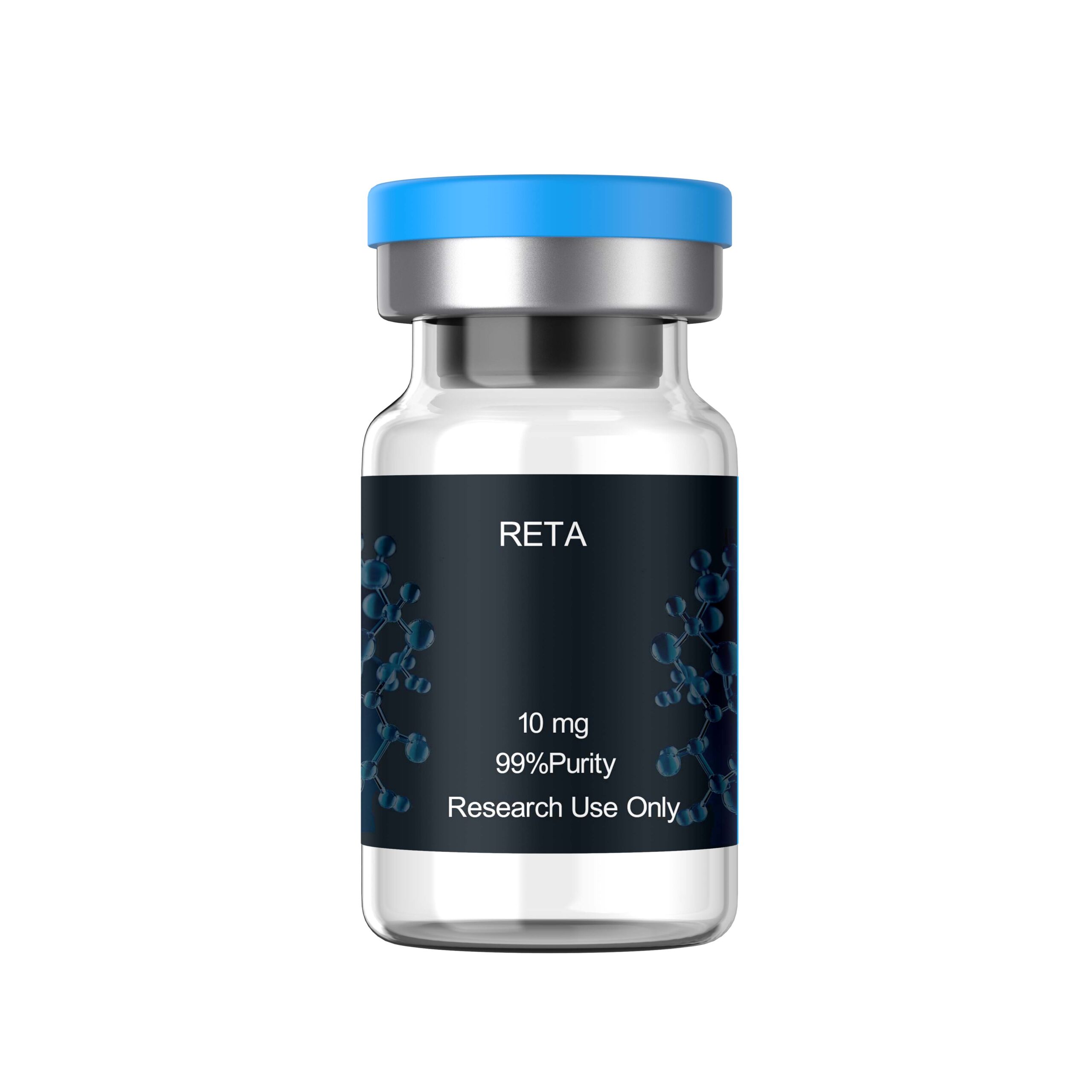
Product Name Retatrutide peptide (CAS: 2381089-83-2) Ly3437943 is a novel high-purity synthetic GLP-1, GIP and GCGR triple receptor agonist. As a professional Retatrutide peptide manufacturer, we supply high-purity laboratory-grade Retatrutide peptide powder for sale, B2B bulk wholesales custom specifications and stable long-term supply capacity to worldwide biotech companies, pharmaceutical R&D labs and academic institutions! Unlike traditional unimolecular or bivalent metabolic peptides, this novel multi-property Retatrutide peptide with combined metabolic regulation will be more effective in suppressing appetite and enhancing insulin sensitivity, blood glucose levels balanced lipid oxidation. With ultra-high biochemical stability, low impurity content, and consistent quality between batches, our Retatrutide peptide has been recognized as a core research reagent for preclinical metabolic disorder and obesity-related studies around the world.
Research Background
Full Text: The incidence of overweight, obesity and type 2 diabetes and metabolic syndrome is rapidly increasing around the world, leading to an ever-increasing demand for high-efficiency multi-target research peptides within the biopharmaceutical industry. Either single-target GLP-1 agonists or dual incretin peptides that enhance a limited aspect of body metabolism could not effectively mimic the complex mechanism of human energy metabolism. To address these technical limitations, a peptide-based trivalent compound — retatrutide — was designed to deliver simultaneous triple-receptor activation with greater metabolic effects. Retatrutide peptide delivered superior weight management and glycemic control, supported by the ground-breaking Phase 3 TRIUMPH and TRANSCEND clinical trial data. Now, it is one of the highest-value research tools around for investigating new metabolic treatment approaches — and designing breakthrough anti-obesity medications — globally.
Disclaimer All products offered on this website are for laboratory research purposes only. They are not drugs, food, supplements or cosmetics. Not for human or animal consumption, diagnosis, treatment or any clinical application. These substances have not been reviewed or evaluated by the FDA or any regulatory authority. Purchaser shall bear full responsibility for proper handling, storage, usage and compliance with local laws and regulations。
Laboranwendungen
Investigation retatrutide peptide can apply in different of preclinical laboratory researches, so used as reagent for metabolic pharmacology studies and drug efficacy evaluation. In vivo experiments used Retatrutide peptide to create standardized obese and diabetic animal models where body weight loss, glucose tolerance, insulin resistance improvement and blood lipid optimization of retatrutide foram compared. In in vitro cell assays, it is primarily used for receptor binding confirmation, intracellular signaling pathways and gene expression profiling related to metabolism. Furthermore, it enables comparative pharmacological studies with other incretin analogues and exploratory research on metabolic sequelae such as fatty liver disease and metabolic inflammation. Its stable biological activity and good experimental repeatability meet the requirements of drug screening in large-scale and institutional long-term group studies.
Qualitätsstandards
All bulk Retatrutide peptide products follow the high international laboratory-grade quality standards and ICH (International Council on Harmonisation) research specifications. Each batch has an HPLC purity count of at least 99.5%, free from detectable impurities, degradation residues and microbial contamination. Biotest products are extensively tested with mass spectrometry (MS) to verify proper molecular structure and full product characterization. International safety limits for key quality indicators, including moisture content, residual solvents and endotoxin levels are strictly controlled. We offer full traceable batch documents,; including HPLC purity report, MS identification certificate and official quality inspection report. Along with uniform production process and tight batch quality control, this ensures that the experimental results for every B2B bulk purchase client remains stable, reliable and reproducible.
Häufig gestellte Fragen (FAQs)
Q1: What are the main benefits of purchasing Retatrutide peptide from us?
A1: Being a genuine Retatrutide peptide manufacturer, we supply high-purity Retatrutide peptide for sale with stable batch quality & full certification documents, and flexible bulk supply solutions. In the context of long-demand worldwide pharmacological R&D and academic research efforts related to obesity management, it has a unique triple-receptor synergistic mechanism that offers more fine-tune metabolic regulation than existing single- or dual-target peptides.
Q2: What about retail wholesale and custom?
A2: Ja. Custom specifications for eosin (Disodium salt) are also supported, a part of the Retatrutide peptide product envisions to provide a stable and long-term supply to global institutions & biotech companies.
Question 3: How do we keep the experimental data stable after buying it in bulk?
A3:Store and prepare Retatrutide peptide according to standard lab practices. The use of all products from one batch for continuous experiments may be an effective way to avoid differences between batches, thus providing stable, repeatable and credible research data for metabolic and pharmacological studies.
10 Häufig gestellte Fragen zu Peptiden
- Was ist ein Peptid??
Antwort: Ein Peptid ist eine kurze Kette von Aminosäuren, die durch Peptidbindungen miteinander verbunden sind. Es ist kleiner und wird vom menschlichen Körper leichter aufgenommen als Proteine, dient als grundlegende funktionelle Substanz in biologischen Organismen.
- Was ist der Unterschied zwischen Peptiden und Proteinen??
Antwort: Der Hauptunterschied liegt in der Moleküllänge und -struktur. Peptide sind kurze Aminosäureketten (besteht normalerweise aus 2–50 Aminosäuren), während Proteine lang sind, komplexe Aminosäureketten mit stabilen dreidimensionalen Strukturen. Peptide haben eine stärkere Permeabilität und eine schnellere Absorptionseffizienz als Proteine.
- Was sind die wichtigsten Arten von Peptiden??
Antwort: Peptide werden hauptsächlich nach der Anzahl der Aminosäuren klassifiziert: Dipeptide, Tripeptide, Oligopeptide (2–10 Aminosäuren) und Polypeptide (10–50 Aminosäuren). Sie können entsprechend ihrer Herkunft auch in natürliche Peptide und synthetische Peptide unterteilt werden.
- Welche biologischen Funktionen haben Peptide??
Antwort: Peptide haben vielfältige biologische Aktivitäten, einschließlich der Regulierung des menschlichen Stoffwechsels, Verbesserung der Immunfunktion, Förderung der Zellreparatur, Anti-Oxidation, Anti-Aging, und Anpassung des Hormonspiegels. Sie fungieren als wichtige Signalmoleküle und regulatorische Faktoren im Körper.
- Sind Peptide für den menschlichen Gebrauch sicher??
Antwort: Die meisten natürlichen und medizinisch zugelassenen synthetischen Peptide sind äußerst sicher. Sie haben ein geringes Molekulargewicht, geringe Toxizität, und reichert sich nicht im Körper an. Jedoch, Nicht standardisierte hochdosierte Peptidprodukte oder unreine synthetische Peptide können leichte Beschwerden verursachen.
- Was sind die häufigsten Anwendungen von Peptiden??
Antwort: Peptide werden in zahlreichen Bereichen häufig eingesetzt. In der Biomedizin, Sie werden zu therapeutischen Arzneimitteln gegen endokrine und Immunerkrankungen verarbeitet; in der Kosmetik, Sie werden zum Anti-Aging und zur Hautreparatur eingesetzt; bei Gesundheitsprodukten, Sie dienen als Nahrungsergänzungsmittel zur Verbesserung der körperlichen Fitness.
- Kann der menschliche Körper exogene Peptide direkt aufnehmen??
Antwort: Ja. Im Gegensatz zu Proteinen, die vor der Absorption zersetzt werden müssen, Kleinmolekulare Peptide können mit hoher Absorptionsrate und Verwertungseffizienz direkt vom Darmtrakt und der Haut absorbiert werden, und kann schnell biologische Wirkungen im Körper entfalten.
- Wofür werden synthetische Peptide verwendet??
Antwort: Synthetische Peptide sind künstlich angepasste Aminosäureketten. Sie werden hauptsächlich für wissenschaftliche Forschung verwendet, klinische Arzneimittelentwicklung, gezielte Produktion von Hautpflegewirkstoffen, und präzise Nahrungsergänzung, mit höherer Reinheit und gezielter Aktivität als einige natürliche Peptide.
- Haben Peptidprodukte Nebenwirkungen??
Antwort: Standard-Peptidprodukte haben für die meisten Menschen fast keine offensichtlichen Nebenwirkungen. Bei einzelnen Gruppen kann es aufgrund körperlicher Unterschiede oder übermäßiger Einnahme zu leichten Magen-Darm-Beschwerden oder Hautempfindlichkeit kommen. Langfristiger übermäßiger Konsum kann das Stoffwechselgleichgewicht des Körpers stören.
- Was ist der Unterschied zwischen Kollagenpeptiden und gewöhnlichen Peptiden??
Antwort: Kollagenpeptide sind eine spezielle Art von funktionellen Peptiden, die aus Kollagen extrahiert und abgebaut werden, Hauptziel ist die Befeuchtung der Haut, Anti-Falten- und Gelenkpflege. Gewöhnliche Peptide decken ein breiteres Spektrum mit vielfältigeren regulatorischen Funktionen ab, einschließlich Immunität und Stoffwechsel, während Kollagenpeptide eine gezieltere Hautpflege- und Anti-Aging-Wirkung haben.
Alle unsere Glasfaserkabelpakete sind mit einer Export-Holztrommel ausgestattet. Die Holzabmessungen des FTTH-Kabels für den Innenbereich betragen 50 x 50 x 32 cm, Lieferlänge 3 km/Trommel, Die Holzabmessungen des Glasfaserkabels für den Außenbereich betragen 110 cm x 110 cm x 70 cm, 0.85CBM, kann ca. geladen werden 33 Trommeln für 20 GP. Akzeptieren Sie auch kundenspezifische Kabeltrommeln von Kunden. Nehmen Sie gerne Kontakt mit uns auf!
GYTS Direct Burial Einfach gepanzertes Glasfaserkabel mit Doppelmantel
GYTS-Glasfaserkabelbild
Versandauswahl |
| Versandart | Kurier | Lieferzeit |
| Expressversand | UPS | 5-15 TAG |
| Fedex | 5-15 TAG |
| Eigene Leitung | USPS | 7-15 TAG |
| Fedex | 7-15 TAG |
| DDP | | 10-20 TAG |
 Powerae.com