Produkteinführung
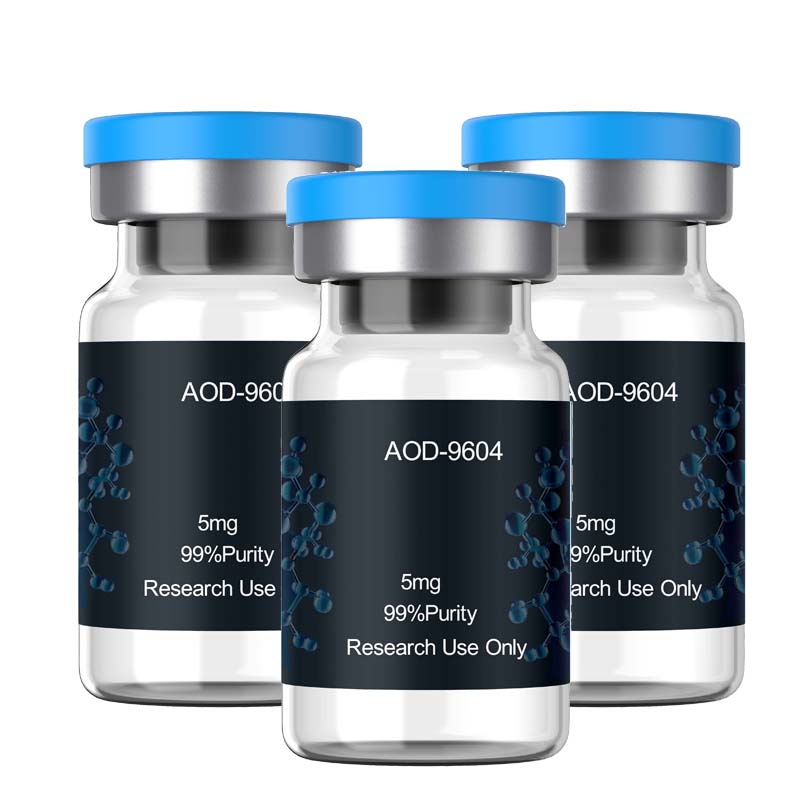
AOD 9604 Peptide-related products Anti-Obesity Drug 9604 (AOD 9604) is a synthetic high-purity 16-amino-acid peptide from the C-terminal fragment (176–191) of human growth hormone (hGH). This peptide, with a stabilized molecular structure that modifies the N-terminal tyrosine residue andhas unique disulfide bond configuration retains the central metabolic regulatory activity of full-lengthhGH whilst abolishing classical growth promoting and diabetogenic side-effects. Specifically aimed at adipose tissue metabolism, it initiates lipolysis while preventing normal fat accumulation through lipogenesis to avoid changing systemic hormone homeostasis. Excellent solubility, biochemical stability and reproducible activity between batches of our lyophilized AOD 9604 Peptid. It was specifically designed for preclinical laboratory research, and proved to be their essential reagent worldwide to metabolic research, obesity mechanism exploration, and cartilage repair related biomedical study.
Hintergrund der Produktforschung
AOD 9604 was formulated in the early 1990s from research seeking to isolate and minimize the potential negative hormonal side effects of human growth hormone while preserving the fat metabolizing function. The lipolytic action of Tesofensine was demonstrated in early preclinical studies using obese animal models, demonstrating marked effectiveness at reducing visceral fat and related metabolic disorders without changing IGF-1 or glucose dynamics. Subsequently, many phase II clinical trials were initiated to assess its value in the treatment of obesity. All large-scale clinical trials ultimately did not meet statistical efficacy endpoints and all commercial drug development ended in 2007, however, detailed mechanistic studies continue to reaffirm its distinctive biology. AOD 9604 is a peptide-based molecule attracting increasing academic interest, implemented into various research, such as metabolic regulation, intra-articular (IA) injections for joint tissue repair and investigation of physiological mechanisms to adipose tissue.
Einhaltung & Haftungsausschluss für Forschung
Research Use Only: AOD 9604 Peptides is for scientific laboratory research and academic experimental purposes only. It is not a medicinal product, nor has it been approved for clinical use by the FDA, EMA or any other regional medical licencing authority. For human clinical diagnostics, treatment of disease, or for injection, oral ingestion or commercial off-label purposes The product meets international laboratory reagent management protocols and synthetic peptide production standards. Notice:All product descriptions, research data and functional introductions are only for academic reference, not the use of medical advice or promoting merchandise. Researchers and purchasers must follow local laws, institutional laboratory management policies, and ethical research guidelines. We are not responsible for any illegal wrongful use and improper operation of the product.
Laboranwendungen
The AOD 9604 Peptide has unique usage that cannot be replaced by any other technique in today biomed labs. Firstly, it is the primary reagent for research on obesity and lipid metabolism. Two, supports cartilage and joint repair research to help scholars explore whether peptide intervention in joint tissue damage and osteoarthritis lesions has protective and repair effects. Dritte, in metabolic physiology, it has been used to conduct association studies between specific targeted regulation of fat metabolism and insulin sensitivity overview that may offer valuable insights for the study of metabolic diseases. What is more, it is always used for comparative studies of hGH fragment functions and pharmacological mechanism verification of metabolic regulators providing stable and reproducible experimental data for preclinical studies.
Qualitätsstandards
Our AOD 9604 Peptide is manufactured and tested under strict international guidelines of the synthetic peptide manufacturing process so it can be used for high standard laboratory research. The product was produced by mature solid-phase peptide synthesis (SPSS) technology with complete and correct amino acid sequence and fully in line with authoritative AOD 9604 structural standard. Each batch is tested through a high-performing liquid chromatography (HPLC) reporting ≥98% purity, free of any synthesis residues, truncated fragments and also heavy metal contaminations. Molecular weight and structure identification is performed by mass spectrometry (MS) to guarantee molecular integrity. Produced in GMP compliant clean workshops, the product is packaged in vacuum lyophilized powder to prevent loss of activity. Every batch passes an endotoxin test, microbial limit tests and stability checking and all orders are supplied with an official quality inspection reports specific to the batch.
Häufig gestellte Fragen (FAQs)
So Q1 is: how AOD 9604 is different from the whole length HGH?
A1: AOD 9604 mimics how the body naturally uses hGH to promote fat metabolism without stimulating growth, blood sugar fluctuation or other hormones that cause side effects compared to full-length hGH. It is safer and more specific in its action, so it is even better for the study of metabolic mechanisms at a targeted level.
Q2: How should we store AOD 9604 Peptid?
A2: Sealed lyophilized powder should be kept tightly sealed and stored at −20 C in a dry, dark and sterile environment. Vermeiden Sie wiederholtes Einfrieren und Auftauen. Due to its biological activity, we recommend using the reconstituted solution immediately.
Q3: Does AOD 9604 work for both in vitro and in vivo?
A3: Ja. Our AOD 9604 peptide has ultra-low endotoxin, excellent solubility, high purity and stable activity, perfectly suitable for in vitro cell experiments and in vivo animal model researches on metabolism and tissue repair.
Q4: Can AOD 9604 be utilised for human fat loss or medical therapy?
A4: NEIN. This product is a laboratory research reagent for professional use only not a clinical drug. There is no allowance for any human therapeutic or weight-loss applications, and off-label use in humans is strictly prohibited.
10 Häufig gestellte Fragen zu Peptiden
- Was ist ein Peptid??
Antwort: Ein Peptid ist eine kurze Kette von Aminosäuren, die durch Peptidbindungen miteinander verbunden sind. Es ist kleiner und wird vom menschlichen Körper leichter aufgenommen als Proteine, dient als grundlegende funktionelle Substanz in biologischen Organismen.
- Was ist der Unterschied zwischen Peptiden und Proteinen??
Antwort: Der Hauptunterschied liegt in der Moleküllänge und -struktur. Peptide sind kurze Aminosäureketten (besteht normalerweise aus 2–50 Aminosäuren), während Proteine lang sind, komplexe Aminosäureketten mit stabilen dreidimensionalen Strukturen. Peptide haben eine stärkere Permeabilität und eine schnellere Absorptionseffizienz als Proteine.
- Was sind die wichtigsten Arten von Peptiden??
Antwort: Peptide werden hauptsächlich nach der Anzahl der Aminosäuren klassifiziert: Dipeptide, Tripeptide, Oligopeptide (2–10 Aminosäuren) und Polypeptide (10–50 Aminosäuren). Sie können entsprechend ihrer Herkunft auch in natürliche Peptide und synthetische Peptide unterteilt werden.
- Welche biologischen Funktionen haben Peptide??
Antwort: Peptide haben vielfältige biologische Aktivitäten, einschließlich der Regulierung des menschlichen Stoffwechsels, Verbesserung der Immunfunktion, Förderung der Zellreparatur, Anti-Oxidation, Anti-Aging, und Anpassung des Hormonspiegels. Sie fungieren als wichtige Signalmoleküle und regulatorische Faktoren im Körper.
- Sind Peptide für den menschlichen Gebrauch sicher??
Antwort: Die meisten natürlichen und medizinisch zugelassenen synthetischen Peptide sind äußerst sicher. Sie haben ein geringes Molekulargewicht, geringe Toxizität, und reichert sich nicht im Körper an. Jedoch, Nicht standardisierte hochdosierte Peptidprodukte oder unreine synthetische Peptide können leichte Beschwerden verursachen.
- Was sind die häufigsten Anwendungen von Peptiden??
Antwort: Peptide werden in zahlreichen Bereichen häufig eingesetzt. In der Biomedizin, Sie werden zu therapeutischen Arzneimitteln gegen endokrine und Immunerkrankungen verarbeitet; in der Kosmetik, Sie werden zum Anti-Aging und zur Hautreparatur eingesetzt; bei Gesundheitsprodukten, Sie dienen als Nahrungsergänzungsmittel zur Verbesserung der körperlichen Fitness.
- Kann der menschliche Körper exogene Peptide direkt aufnehmen??
Antwort: Ja. Im Gegensatz zu Proteinen, die vor der Absorption zersetzt werden müssen, Kleinmolekulare Peptide können mit hoher Absorptionsrate und Verwertungseffizienz direkt vom Darmtrakt und der Haut absorbiert werden, und kann schnell biologische Wirkungen im Körper entfalten.
- Wofür werden synthetische Peptide verwendet??
Antwort: Synthetische Peptide sind künstlich angepasste Aminosäureketten. Sie werden hauptsächlich für wissenschaftliche Forschung verwendet, klinische Arzneimittelentwicklung, gezielte Produktion von Hautpflegewirkstoffen, und präzise Nahrungsergänzung, mit höherer Reinheit und gezielter Aktivität als einige natürliche Peptide.
- Haben Peptidprodukte Nebenwirkungen??
Antwort: Standard-Peptidprodukte haben für die meisten Menschen fast keine offensichtlichen Nebenwirkungen. Bei einzelnen Gruppen kann es aufgrund körperlicher Unterschiede oder übermäßiger Einnahme zu leichten Magen-Darm-Beschwerden oder Hautempfindlichkeit kommen. Langfristiger übermäßiger Konsum kann das Stoffwechselgleichgewicht des Körpers stören.
- Was ist der Unterschied zwischen Kollagenpeptiden und gewöhnlichen Peptiden??
Antwort: Kollagenpeptide sind eine spezielle Art von funktionellen Peptiden, die aus Kollagen extrahiert und abgebaut werden, Hauptziel ist die Befeuchtung der Haut, Anti-Falten- und Gelenkpflege. Gewöhnliche Peptide decken ein breiteres Spektrum mit vielfältigeren regulatorischen Funktionen ab, einschließlich Immunität und Stoffwechsel, während Kollagenpeptide eine gezieltere Hautpflege- und Anti-Aging-Wirkung haben.
Alle unsere Glasfaserkabelpakete sind mit einer Export-Holztrommel ausgestattet. Die Holzabmessungen des FTTH-Kabels für den Innenbereich betragen 50 x 50 x 32 cm, Lieferlänge 3 km/Trommel, Die Holzabmessungen des Glasfaserkabels für den Außenbereich betragen 110 cm x 110 cm x 70 cm, 0.85CBM, kann ca. geladen werden 33 Trommeln für 20 GP. Akzeptieren Sie auch kundenspezifische Kabeltrommeln von Kunden. Nehmen Sie gerne Kontakt mit uns auf!
GYTS Direct Burial Einfach gepanzertes Glasfaserkabel mit Doppelmantel
GYTS-Glasfaserkabelbild
Versandauswahl |
| Versandart | Kurier | Lieferzeit |
| Expressversand | UPS | 5-15 TAG |
| Fedex | 5-15 TAG |
| Eigene Leitung | USPS | 7-15 TAG |
| Fedex | 7-15 TAG |
| DDP | | 10-20 TAG |
 Powerae.com