Produkteinführung
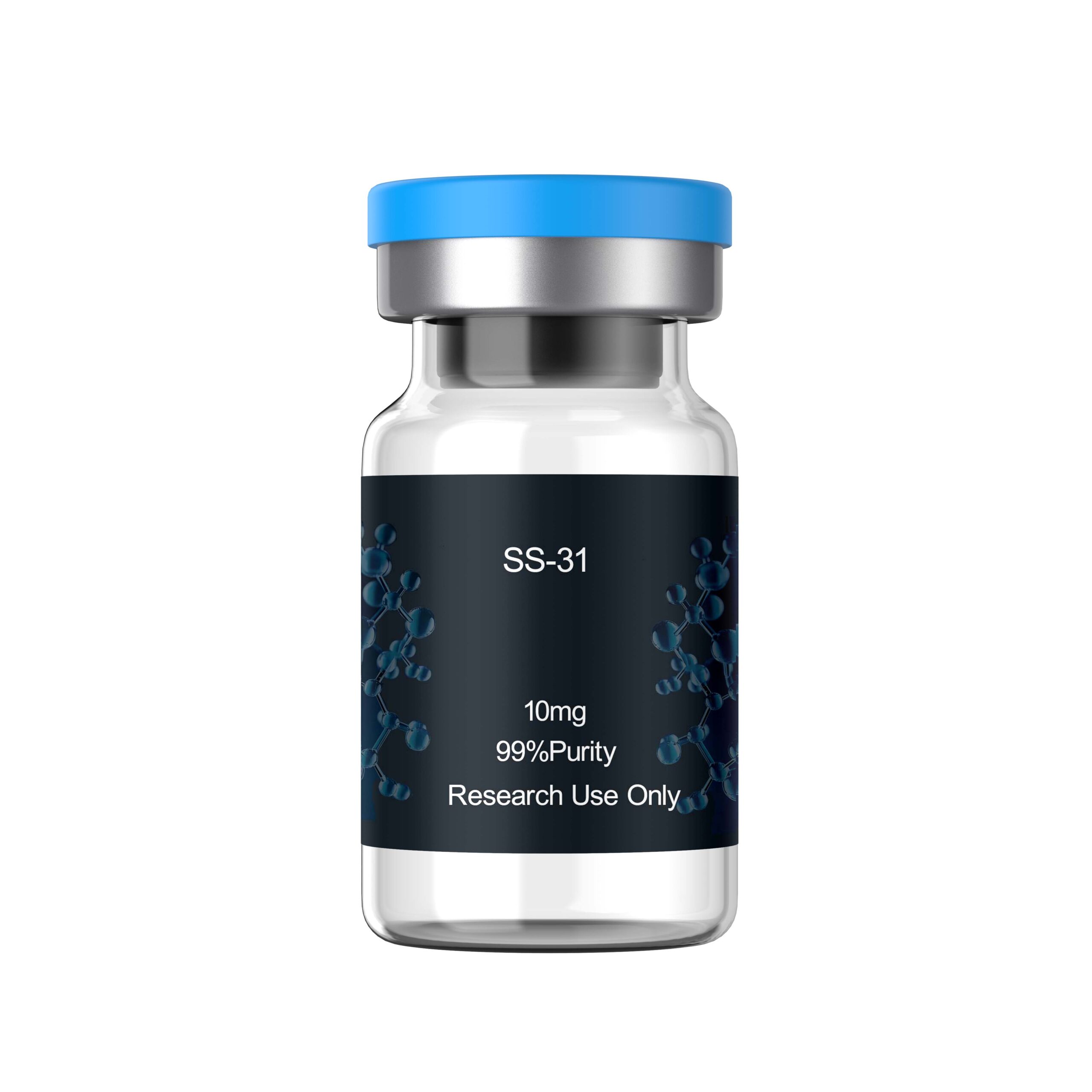
SS-31 Peptide Elamipretide (also known as SS-31 or MTP-131) is a new cell-permeable mitochondrial-targeted synthetic peptide developed for oxidative stress and mitochondrial function research. Here we present an investigational peptide of only four different optimized amino acid residues that selectively targets the inner mitochondrial membrane and is distinct from commonly used antioxidant reagents. SS-31 protects mitochondrial structural integrity from oxidative stress, inhibits excess reactive oxygen species (ROS), and improves mitochondrial energy metabolism while maintaining normal cellular physiological functions. Lyophilized powder from ultra-high purity, it has excellent solubility in water and extremely low level of endotoxin. The core specialized reagent is used for global research in mitochondrial biology, Anti-Oxidation, tissue protection and metabolic disease preclinical studies with stable batch-to-batch bioactivity and outstanding biocompatibility.
Hintergrund der Produktforschung
Academically, SS-31 Peptide was developed to address the historical limitations of conventional therapeutic antioxidants that cannot target mitochondria and provide insufficient efficacy to eliminate mitochondrial oxidative damage. Biomedical researchers discovered a number of cationic antioxidant peptides in the 1990s, and SS-31 was selected due to its unique target realignment towards mitochondria as well as its potent ability to scavenge free radicals. Preclinical studies validated that SS-31 can specifically attenuate mitochondrial ROS overload, rescue oxidative stress-induced cell apoptosis and restore dysfunction in energetics with impaired respiration among other benefits. Further detailed investigations confirmed its cardioprotective, neuroprotective and myoprotective roles. SS-31 has progressed to advance clinical stages but is only a synthetic peptide raw material for basic laboratory research, making it a hotspot reagent in current life sciences related to mitochondrial damage mechanism and antioxidant intervention research.
Einhaltung & Haftungsausschluss für Forschung
This SS-31 Peptide is For Research Use Only (RUO). This is neither a pharmaceutical drug or a health supplement nor an ingredient used in cosmetics and does not hold formal clinical approval by the FDA, EMA or any regional medical regulatory authority. Human clinical diagnosis, Krankheitsbehandlung, oraler Verzehr, injection administration or other commercial application is not licensed under the product. The descriptions of products and information about experiments presented in these pages are for educational purposes only and do not constitute any medical advice or therapeutic recommendations. Buyers and researchers must comply with local laws, institutional laboratory management regulations and ethical standards for conducting research. We shall not be liable for any unauthorized illegal use, improper operation or non-research application of the product.
Laboranwendungen
In modern biomedical and physiological labs, SS-31 Peptide has irreplaceable application value. It is mainly used in the study of mitochondrial function, and is applied in vitro cell models and in vivo animal experiments to investigate the regulation mechanism of mitochondrial oxidative stress, energy metabolism and repair damage. Secondly, it encourages research support in anti-oxidation and cell protection, especially on verifying its intervention effect on oxidative-induced cell senescence as wellas tissue injury. Thirdly, SS-31 is a key reagent in the study of various human degenerative diseases such as neural degeneration, myocardial injury and the exploration of metabolic organ damage mechanism. Meanwhile, it is mainly applied in targeted antioxidant comparative experiment, mitochondrial pathway pharmacological verification and preclinical safety analysis, obtaining accurate and repeatable experimental data for high-precision biomedical applications.
Qualitätsstandards
Our research grade SS-31 Peptide meets all necessary international synthetic peptide production requirements and global laboratory reagent quality standards. Utilizing cutting-edge solid-phase peptide synthesis (SPSS) Technologie, the product has a full and standardized amino acid sequence with an accurate molecular structure—no truncated fragments or structural deviations. HPLC Testing: Each batch is tested for purity (≥98%), free of synthesis Residues, heavy metal residues and Impurity particle. Verification of mass spectrometry (MS) batch-by-batch, which is used to verify molecular weight and structural integrity. The product is produced in GMP-source clean workshops using vacuum lyophilized sealed packaging to avoid oxidation and activity dropping. Its batches consistently pass INFEX-01 endotoxin detection, CIP user critical medium validation, and microbial limit testing in addition to long-term stability screening with batch-specific COA quality inspection reports available with each order.
Häufig gestellte Fragen (FAQs)
Q1: The primary research benefit of SS-31 Peptide
A1: SS-31 is not an ordinary antioxidant; it is uniquely capable of mitochondrial targeting. This selectively removes mitochondrial ROS efficiently and does not disrupt normal cell metabolism, resulting in a higher accuracy of results for oxidative stress and mitochondrial function studies.
Q2: How to keep SS-31 peptide? SS-31 Powder:
A2: Lyophilized SS-31 powder should be tightly sealed and stored at -20℃ in a dry, dark, and sterile manner. Avoid freeze-thaw cycles. To avoid any loss of biological activity, it is recommended that a reconstituted peptide solution be used immediately.
Q3: Can we do in vitro and vivo experiments using SS-31?
A3: Ja. Ultra-low endotoxin, excellent solubility and stable targeted bioactivity, we create high-purity SS-31 Peptide which fully comply with the experimental standards of in vitro cell assays and in vivo animal model research.
Q4: Is it polypeptide able to be used for the human medicine or health care?
A4: NEIN. This product is for PROFESSIONAL LABORATORY RESEARCH USE ONLY. No clinical treatment of human beings, physical conditioning or personal application is allowed.
10 Häufig gestellte Fragen zu Peptiden
- Was ist ein Peptid??
Antwort: Ein Peptid ist eine kurze Kette von Aminosäuren, die durch Peptidbindungen miteinander verbunden sind. Es ist kleiner und wird vom menschlichen Körper leichter aufgenommen als Proteine, dient als grundlegende funktionelle Substanz in biologischen Organismen.
- Was ist der Unterschied zwischen Peptiden und Proteinen??
Antwort: Der Hauptunterschied liegt in der Moleküllänge und -struktur. Peptide sind kurze Aminosäureketten (besteht normalerweise aus 2–50 Aminosäuren), während Proteine lang sind, komplexe Aminosäureketten mit stabilen dreidimensionalen Strukturen. Peptide haben eine stärkere Permeabilität und eine schnellere Absorptionseffizienz als Proteine.
- Was sind die wichtigsten Arten von Peptiden??
Antwort: Peptide werden hauptsächlich nach der Anzahl der Aminosäuren klassifiziert: Dipeptide, Tripeptide, Oligopeptide (2–10 Aminosäuren) und Polypeptide (10–50 Aminosäuren). Sie können entsprechend ihrer Herkunft auch in natürliche Peptide und synthetische Peptide unterteilt werden.
- Welche biologischen Funktionen haben Peptide??
Antwort: Peptide haben vielfältige biologische Aktivitäten, einschließlich der Regulierung des menschlichen Stoffwechsels, Verbesserung der Immunfunktion, Förderung der Zellreparatur, Anti-Oxidation, Anti-Aging, und Anpassung des Hormonspiegels. Sie fungieren als wichtige Signalmoleküle und regulatorische Faktoren im Körper.
- Sind Peptide für den menschlichen Gebrauch sicher??
Antwort: Die meisten natürlichen und medizinisch zugelassenen synthetischen Peptide sind äußerst sicher. Sie haben ein geringes Molekulargewicht, geringe Toxizität, und reichert sich nicht im Körper an. Jedoch, Nicht standardisierte hochdosierte Peptidprodukte oder unreine synthetische Peptide können leichte Beschwerden verursachen.
- Was sind die häufigsten Anwendungen von Peptiden??
Antwort: Peptide werden in zahlreichen Bereichen häufig eingesetzt. In der Biomedizin, Sie werden zu therapeutischen Arzneimitteln gegen endokrine und Immunerkrankungen verarbeitet; in der Kosmetik, Sie werden zum Anti-Aging und zur Hautreparatur eingesetzt; bei Gesundheitsprodukten, Sie dienen als Nahrungsergänzungsmittel zur Verbesserung der körperlichen Fitness.
- Kann der menschliche Körper exogene Peptide direkt aufnehmen??
Antwort: Ja. Im Gegensatz zu Proteinen, die vor der Absorption zersetzt werden müssen, Kleinmolekulare Peptide können mit hoher Absorptionsrate und Verwertungseffizienz direkt vom Darmtrakt und der Haut absorbiert werden, und kann schnell biologische Wirkungen im Körper entfalten.
- Wofür werden synthetische Peptide verwendet??
Antwort: Synthetische Peptide sind künstlich angepasste Aminosäureketten. Sie werden hauptsächlich für wissenschaftliche Forschung verwendet, klinische Arzneimittelentwicklung, gezielte Produktion von Hautpflegewirkstoffen, und präzise Nahrungsergänzung, mit höherer Reinheit und gezielter Aktivität als einige natürliche Peptide.
- Haben Peptidprodukte Nebenwirkungen??
Antwort: Standard-Peptidprodukte haben für die meisten Menschen fast keine offensichtlichen Nebenwirkungen. Bei einzelnen Gruppen kann es aufgrund körperlicher Unterschiede oder übermäßiger Einnahme zu leichten Magen-Darm-Beschwerden oder Hautempfindlichkeit kommen. Langfristiger übermäßiger Konsum kann das Stoffwechselgleichgewicht des Körpers stören.
- Was ist der Unterschied zwischen Kollagenpeptiden und gewöhnlichen Peptiden??
Antwort: Kollagenpeptide sind eine spezielle Art von funktionellen Peptiden, die aus Kollagen extrahiert und abgebaut werden, Hauptziel ist die Befeuchtung der Haut, Anti-Falten- und Gelenkpflege. Gewöhnliche Peptide decken ein breiteres Spektrum mit vielfältigeren regulatorischen Funktionen ab, einschließlich Immunität und Stoffwechsel, während Kollagenpeptide eine gezieltere Hautpflege- und Anti-Aging-Wirkung haben.
Alle unsere Glasfaserkabelpakete sind mit einer Export-Holztrommel ausgestattet. Die Holzabmessungen des FTTH-Kabels für den Innenbereich betragen 50 x 50 x 32 cm, Lieferlänge 3 km/Trommel, Die Holzabmessungen des Glasfaserkabels für den Außenbereich betragen 110 cm x 110 cm x 70 cm, 0.85CBM, kann ca. geladen werden 33 Trommeln für 20 GP. Akzeptieren Sie auch kundenspezifische Kabeltrommeln von Kunden. Nehmen Sie gerne Kontakt mit uns auf!
GYTS Direct Burial Einfach gepanzertes Glasfaserkabel mit Doppelmantel
GYTS-Glasfaserkabelbild
Versandauswahl |
| Versandart | Kurier | Lieferzeit |
| Expressversand | UPS | 5-15 TAG |
| Fedex | 5-15 TAG |
| Eigene Leitung | USPS | 7-15 TAG |
| Fedex | 7-15 TAG |
| DDP | | 10-20 TAG |
 Powerae.com