Product Introduction
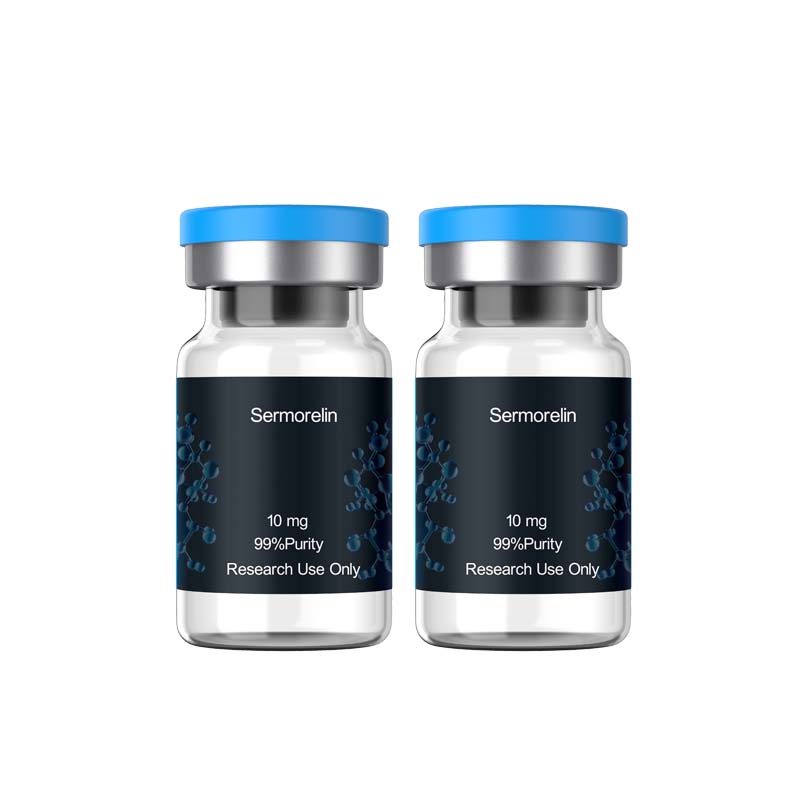
Sermorelin peptide is an acetylated GRF (1-29) also called Sermorelin Acetate, a high-purity synthetic peptide analog of growth hormone-releasing hormone (GHRH) found in humans. Structurally, it comprises the first 29 amino acid residues of the natural GHRH sequence (44-amino-acid GHRH sequence), which was determined to be a minimal bioactive fragment that fully binds and activates human GHRH receptors. This peptide is much more stable, less costly to produce and a reproducible biological activity compared with full-length GHRH (23) having a chemical structure of 3357.92 g/mol. Sermorelin is available in bulk in clinical and laboratory research, and it essentially produces GH secretagogues by exerting a stimulating effect on the activity of the anterior pituitary where GH release occurs naturally as an endogenous secretion (via a pulsatile mechanism) without addressing what could be adverse feedback inhibition risks associated with exogenous failures to provide ideal supplementation for GH. It has emerged as a central research instrument in the fields of endocrinology, metabolic physiology, and aging-related biomedical research.
Product Research Background
Sermorelin was discovered as part of peptide research in the 1980s, when scientists first isolated and sequenced human GHRH from endogenous sources. Pharmacological studies demonstrated that the initial 29 amino acid N-terminal [1-29] fragment of GHRH retained full physiological activity, whilst downstream C-terminal fragments had no significant effect on receptor binding and signal transduction. This important discovery set the stage for the development of Sermorelin. This was followed by a number of clinical and preclinical trials in subsequent decades that confirmed its safety and efficacy in governing the GH axis. After gaining FDA approval for clinical adjuvant diagnosis and growth hormone deficiency investigations, Sermorelin was slowly removed from commercial clinical usage due to market adjustment needs instead of some sort of parameters rather than safety problems. To date, one of the most investigated GHRH analogs with extensive published literature supporting its use in elucidating growth regulation, metabolic homeostasis, and hormonal changes accompanying aging.
Compliance & Research Disclaimer
This peptide product of Sermorelin is intended solely for use in scientific laboratory research and academic study. Human clinical use, medical diagnosis, treatment or personal consumption is not approved. The product meets the internationally accepted specifications for peptide research reagent production and regional laboratory material management regulations. The products and data that you have provided in this section on the site are for educational writing or experimental testing purposes only and not intended for commercial medical use or non-label use. It is incumbent on researchers and purchasers to comply fully with local laws, regulations and institutional laboratory management requirements. We disclaim all liabilities arising from any unauthorized clinical application, improper use or unlawful operation of the product. No product description and research data represent or guarantee any medical efficacy or therapeutic effect.
Laboratory Applications
Sermorelin peptide is widely used as an essential research reagent in many modern biomedical laboratories with standardized applications for various research directions. Firstly, it has been extensively applied in the study of GH axis physiology which enables scholars to analyze the regulatory mechanism of hypothalamic-pituitary growth hormone secretion and explore endogenous hormones constituting a feedback regulation loop between various levels of intra- and extra-brain nuclei. Secondly, it has a role in research of growth hormone deficiency and developmental disorders, providing experimental data for in-depth studies on the pathogenesis and intervention strategies of abnormal stature. Third, it is used in the field of aging biology to determine whether age-related decline in GH secretion contribute to metabolic aging and/or the loss of organ function or body composition. Sermorelin is also used in experiments to detect pituitary reserve function, and for studies of metabolic regulation using in vitro and/or animal models which assist researchers when validating the effect of peptide intervention on cell growth activity, lipid metabolism and energy balance. It has biological effects that are stable and repeatable, which ensures high reliability for experimental data.
Quality Standards
We follow international standards for peptide production and determination to supply high quality options for research use only. Your product has a normal molecular formula of C149H246N44O42S and an amino acid sequence as follows, with complete concordance to the authoritative GRF (1-29) specification. Immune defence efficacy for all batches: HPLC-tested with guaranteed purity - ≥ 98% (free from irrelevant peptide fragments, impurities and heavy metal residues.) The first verification of molecular weight and structure provides the verifying point for every batch block through mass spectrometry (MS). It is produced at a GMP compliant clean laboratory, supplied in standardised lyophilized powder packaging to prevent degradation and contamination. Before delivering, it is stringently checked for microbial limit testing, endotoxin detection and stability testing. With each batch, a full quality inspection report — purity, structure verification results and safety test indicators are all provided so that you can guarantee experimental consistency and repeatability.
Frequently Asked Questions (FAQs)
Q1: What are its 3 main benefits compared to full-length GHRH? Answer 1: Sermorelin is a minimal active fragment of GHRH with better chemical stability, longer half-life of degradation and more stable biological activity in experiment. As it is less expensive, more stable and easier to store and transport than full-length GHRH, it is more appropriate for long-term use and large-scale laboratory studies.
Q2: Under what conditions should you store Sermorelin peptide?
Q2 — How do you store the lyophilized powder? A2: The lyophilized powder should be dry, dark and steriled in -20 °C and avoid repeated freezing–thawing. After reconstitution with sterile water, it should be used as soon as possible and can only be stored at a low temperature in refrigerator for a short time (i.e., activity loss).
Q3: Is it appropriate for in vivo and in vitro experiments?
A3: Yes. It has stable biological activity and low endotoxin, which meets the requirement of mainstream biomedical experiments: Our high-purity Sermorelin can be applied to in vitro cell-level mechanism research experiments and in vivo animal model experimental research through various routes of administration.
Q4: Is your product for use in human medicine?
A4: Absolutely not. Disclaimer: This product is a professional laboratory research reagent only, not a pharmaceutical product. It does not allow for any human body injection, treatment or clinical auxiliary application.
10 Common FAQs About Peptides
- What is a peptide?
Answer: A peptide is a short chain of amino acids linked together by peptide bonds. It is smaller and more easily absorbed by the human body than proteins, serving as a fundamental functional substance in biological organisms.
- What is the difference between peptides and proteins?
Answer: The core difference lies in molecular length and structure. Peptides are short amino acid chains (usually consisting of 2–50 amino acids), while proteins are long, complex amino acid chains with stable three-dimensional structures. Peptides have stronger permeability and faster absorption efficiency than proteins.
- What are the main types of peptides?
Answer: Peptides are mainly classified by the number of amino acids: dipeptides, tripeptides, oligopeptides (2–10 amino acids) and polypeptides (10–50 amino acids). They can also be divided into natural peptides and synthetic peptides according to their sources.
- What are the biological functions of peptides?
Answer: Peptides have diverse biological activities, including regulating human metabolism, improving immune function, promoting cell repair, anti-oxidation, anti-aging, and adjusting hormone levels. They act as key signaling molecules and regulatory factors in the body.
- Are peptides safe for human use?
Answer: Most natural and medically approved synthetic peptides are highly safe. They have small molecular weight, low toxicity, and will not accumulate in the body. However, unstandardized high-dose peptide products or impure synthetic peptides may cause mild discomfort.
- What are the common applications of peptides?
Answer: Peptides are widely used in multiple fields. In biomedicine, they are made into therapeutic drugs for endocrine and immune diseases; in cosmetics, they are used for anti-aging and skin repair; in health products, they serve as nutritional supplements to improve physical fitness.
- Can the human body absorb exogenous peptides directly?
Answer: Yes. Unlike proteins that need to be decomposed before absorption, small-molecule peptides can be directly absorbed by the intestinal tract and skin with high absorption rate and utilization efficiency, and can quickly exert biological effects in the body.
- What are synthetic peptides used for?
Answer: Synthetic peptides are artificially customized amino acid chains. They are mainly used for scientific research, clinical drug development, targeted skin care ingredient production, and precise nutritional supplementation, with higher purity and targeted activity than some natural peptides.
- Do peptide products have side effects?
Answer: Standard peptide products have almost no obvious side effects for most people. Individual groups may experience mild gastrointestinal discomfort or skin sensitivity due to physical differences or excessive intake. Long-term excessive use may disrupt the body’s metabolic balance.
- What is the difference between collagen peptides and ordinary peptides?
Answer: Collagen peptides are a specific type of functional peptide extracted and decomposed from collagen, mainly targeting skin moisturizing, anti-wrinkle and joint care. Ordinary peptides cover a broader range with more diverse regulatory functions including immunity and metabolism, while collagen peptides have more focused skincare and anti-aging effects.
All of our fiber optic cable package are with export wooden drum. Indoor FTTH cable’s wooden dimension is 50x50x32cm, delivery length 3km/drum, Outdoor fiber optic cable’s wooden dimension is 110cm*110cm*70cm, 0.85CBM, can be load about 33 drums for a 20GP.Also accept custom cable drum from customers. welcome to contact us!
GYTS Direct Burial Single Armored Double Sheath Fiber Optic Cable
GYTS Fiber Optic Cable Picture
Shipping Choice |
| Shipping method | Courier | Shipping Time |
| Express Shipping | UPS | 5-15 DAY |
| Fedex | 5-15 DAY |
| Dedicated line | USPS | 7-15 DAY |
| Fedex | 7-15 DAY |
| DDP | | 10-20 DAY |
 Powerae.com