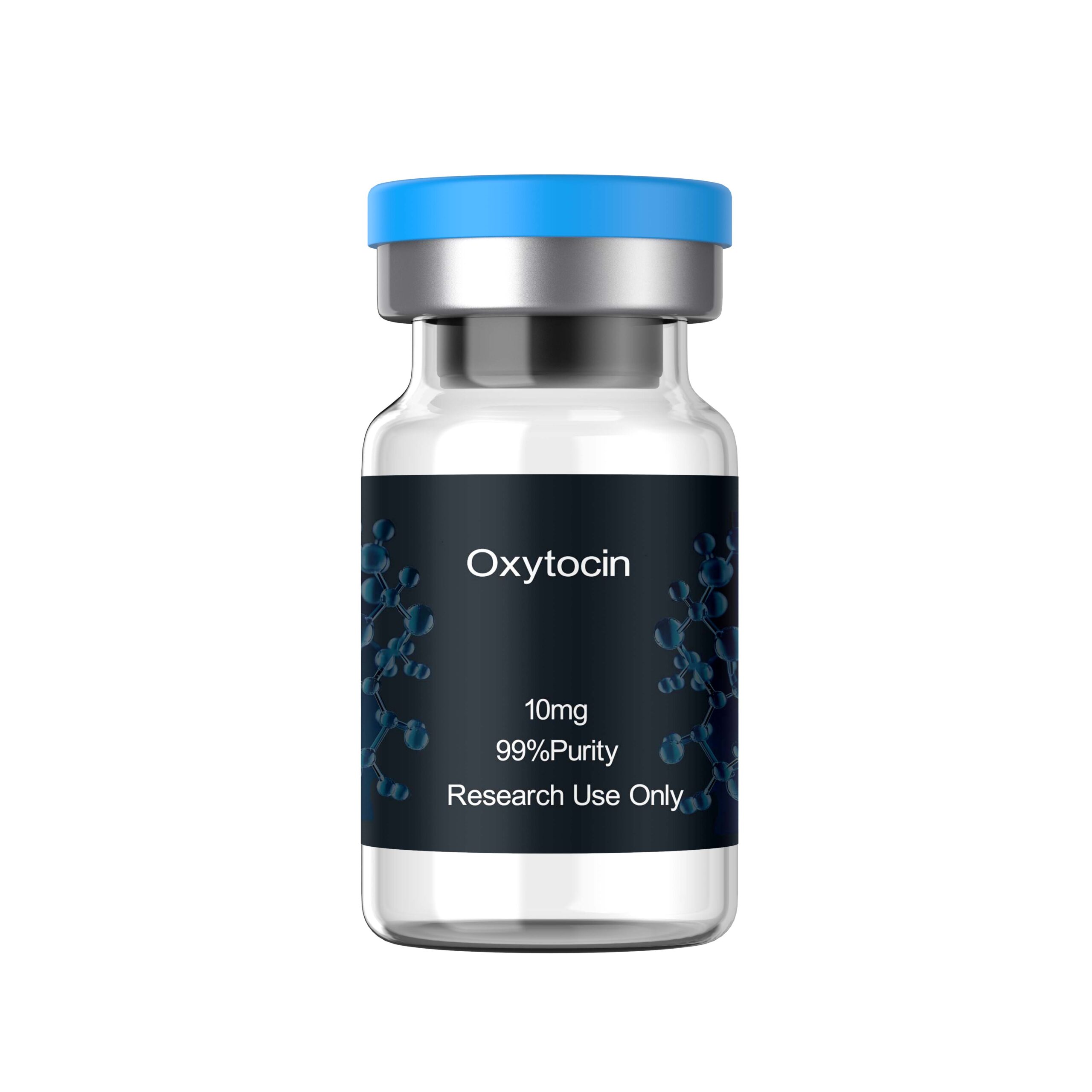
Description of Oxytocin Peptide
Name of Generic Drug: Oxytocin. Oxytocin is a well-known endogenous neuropeptide as well as a synthetic research peptide. There are many brand names for this drug in the medical field. 하지만, the synthetic research form of this drug is not known by any specific name. The generic name considered for research purposes is Oxytocin, and this drug is viewed as a biological peptide in the research conducted in the metabolic, neurological, and physiological fields.
Class of Drug: Oxytocin Receptor (OXTR) Agonist
Chemical Description: Oxytocin is a neuropeptide composed of nine amino acids linked by disulfide bonds between two cysteine residues at sites 1 and 6 forming a cyclic structure. The synthetic research version of this drug preserves the natural amino acid sequence of this consequently exhibiting a stable structure making this drug quite biologically active. The cyclic structure of this drug will ensure that it is not targeted during proteolytic degradation unlike linear synthetic peptides.
- Working
1.1 Activation of Receptor
Oxytocin works by stimulating the Oxytocin Receptor (OXTR), the receptor which belongs to the GQ group and is present in the central nervous system, adipose tissue, pancreas and vascular tissues. The stimulation of the receptor further
1.2 Effects on Metabolism and Physiology
Aside from its well-known functions in regulating the social behavior and reproduction of individuals, oxytocin has important functions in regulating various aspects of metabolism, as described in numerous preclinical studies. It modifies the functions of the pancreas in such a way as to improve insulin secretion and to increase peripheral tissue insulin sensitivity. As a result, oxytocin is able to reduce the effects of insulin resistance. Moreover, this peptide regulates lipid metabolism by increasing lipid mobilization and reducing fat accumulation, which helps prevent chronic weight gain. Furthermore, oxytocin decreases the activity of the sympathetic nervous system, thereby reducing the level of chronic inflammation and preventing various metabolic and physiological disorders.
규정 준수 & 연구 면책조항
Oxytocin Peptide is for research use only and academic experimental purposes. It is not registered as a pharmaceutical drug, dietary supplement or an over-the-counter medicine and has no clinical use approval from the FDA, EMA or other regional medical regulatory body. The product cannot be used for human clinical diagnosis, treatment of disease, oral or intravenous administration as well as commercial off-label usage. All of the product details and research data is academic in nature and not intended as medical advice or to be construed as therapeutic claims. Local laws, institutional laboratory-management requirements, and ethical-research standards must be followed by all purchasers and researchers. 무단 불법 사용시 당사는 책임을 지지 않습니다., 제품의 부적절한 작동 또는 비연구 용도.
- Uses and Indications
Synthetic oxytocin of research grade is used solely for preclinical research and any use of oxytocin for humans is not permitted.
Research Related to Diabetes Mellitus Type II – Used for studies regarding the mechanisms to improve insulin sensitivity, protect pancreatic beta cells, and block the processes of chronic inflammation in diabetes.
Weight Control Research – Involved in studies examining the mechanisms of obesity with regard to the control of the energy balance, reduction in visceral obesity, and improvement in obesity-related metabolic syndrome.
Research RelatedFundamental neurophysiological research has presented an important experimental tool for the study of neuropsychiatric regulation, modulation of stress response, and balance of the neuroendocrine axis during preclinical studies.
- Dosage and administration (Generic Standard Procedure of Research Laboratory)
3.1 Routes and frequency
Systematic administration methods in the research laboratory involve subcutaneous administration, intraperitoneal administration, and intranasal administration. Subcutaneous administration is mainly chosen for the purpose of systemic study of metabolism due to high safety of bioavailability and ease to use. The usual frequency of using the administration in practice is once a day for conducting long-term metabolism experiments (e.g., passive metabolic interventions) while variable doses are used with the aim of making qualitative assessments of the acute physiological effects.
3.2 Titration schedule
The starting dose of oxytocin for the intended observations for preclinical animal research ranges from 0.1 to 0.5 IU daily. The dose for the medium level of effectiveness is 1-2IU. The maximum experimental dose of oxytocin is limited to 5 IU daily, as higher doses may lead to over-activation of the OXTR, disturbances in hormonal values, and adverse cardiovascular events.
3.3 Missed dose
There is no need for supplementation of the dose that was missed in the course of standardized laboratory research. It is important for the researchers to keep accurate records of the missed dose.
- Forms
Research-grade oxytocin has a single dosage form depicted as lyophilized sterile peptide powder. A sterile bacteriostatic water or a saline solution is to be used for the reconstitution of the powder dosage form for further injection or for carrying out intranasal administration. The powder is kept in a dry and dark place to maintain its effectiveness and stability for long periods since there is no possibility of any oral drug presentation.
- FDA Regulations
The FDA acknowledges oxytocin administered in a clinical setting differently from the research-grade oxytocin peptide. Synthetic research-grade oxytocin peptide is not allowed to be used for the needs of patients and for any other cosmetic or daily consumption purposes. The application of research-grade oxytocin is permitted solely to qualified laboratories, institutions of scientific research work, and preclinical research teams.
10 펩타이드에 관한 일반적인 FAQ
- 펩타이드란??
답변: 펩타이드는 펩타이드 결합으로 서로 연결된 아미노산의 짧은 사슬입니다.. 단백질보다 크기가 작고 인체에 더 쉽게 흡수됩니다., 생물학적 유기체의 기본 기능 물질로 작용.
- 펩타이드와 단백질의 차이점은 무엇입니까?
답변: 핵심 차이점은 분자 길이와 구조에 있습니다.. 펩타이드는 짧은 아미노산 사슬입니다. (일반적으로 2~50개의 아미노산으로 구성), 단백질은 길지만, 안정적인 3차원 구조를 지닌 복잡한 아미노산 사슬. 펩타이드는 단백질보다 투과성이 강하고 흡수 효율이 빠릅니다..
- 주요 유형의 펩타이드는 무엇입니까??
답변: 펩타이드는 주로 아미노산의 수에 따라 분류됩니다.: 디펩티드, 트리펩타이드, 올리고펩타이드 (2–10개의 아미노산) 및 폴리펩티드 (10–50개 아미노산). 또한 공급원에 따라 천연 펩타이드와 합성 펩타이드로 나눌 수 있습니다..
- 펩타이드의 생물학적 기능은 무엇입니까?
답변: 펩타이드는 다양한 생물학적 활동을 가지고 있습니다., 인간의 신진 대사 조절을 포함하여, 면역 기능 개선, 세포 복구 촉진, 항산화, 노화 방지, 그리고 호르몬 수치 조절. 그들은 신체의 주요 신호 분자 및 조절 요인으로 작용합니다..
- 펩타이드는 인간이 사용하기에 안전한가요??
답변: 대부분의 천연 및 의학적으로 승인된 합성 펩타이드는 매우 안전합니다.. 그들은 작은 분자량을 가지고 있습니다, 낮은 독성, 그리고 몸에 축적되지 않습니다. 하지만, 표준화되지 않은 고용량 펩타이드 제품이나 순수하지 않은 합성 펩타이드는 경미한 불편함을 유발할 수 있습니다..
- 펩타이드의 일반적인 응용 분야는 무엇입니까?
답변: 펩타이드는 다양한 분야에서 널리 사용됩니다.. 생물의학 분야, 내분비 및 면역 질환 치료 약물로 만들어집니다.; 화장품에서, 그들은 노화 방지 및 피부 회복에 사용됩니다.; 건강제품에, 체력을 향상시키기 위한 영양 보충제 역할을 합니다..
- 인체가 외인성 펩타이드를 직접 흡수할 수 있나요??
답변: 예. 흡수되기 전에 분해되어야 하는 단백질과 달리, 저분자 펩타이드는 높은 흡수율과 활용효율로 장관과 피부에 직접 흡수될 수 있습니다., 신체에 생물학적 효과를 빠르게 발휘할 수 있습니다..
- 합성 펩타이드는 무엇을 위해 사용됩니까??
답변: 합성 펩타이드는 인위적으로 맞춤화된 아미노산 사슬입니다.. 그들은 주로 과학 연구에 사용됩니다., 임상 약물 개발, 타겟 스킨케어 성분 생산, 그리고 정확한 영양보충, 일부 천연 펩타이드보다 더 높은 순도와 표적 활성을 가지고 있습니다..
- 펩타이드 제품에 부작용이 있나요??
답변: 표준 펩타이드 제품은 대부분의 사람들에게 뚜렷한 부작용이 거의 없습니다.. 개별 그룹에서는 신체적 차이나 과다 섭취로 인해 경미한 위장 불편감이나 피부 민감성이 나타날 수 있습니다.. 장기간 과도하게 사용하면 신체의 대사 균형이 깨질 수 있습니다..
- 콜라겐 펩타이드와 일반 펩타이드의 차이점은 무엇입니까?
답변: 콜라겐 펩타이드는 콜라겐에서 추출, 분해된 특정 형태의 기능성 펩타이드입니다., 주로 피부 보습을 목표로, 주름개선 및 관절관리. 일반 펩타이드는 면역, 대사 등 더욱 다양한 조절 기능으로 더 넓은 범위를 포괄합니다., 콜라겐 펩타이드는 보다 집중적인 스킨케어와 안티에이징 효과를 가지고 있습니다..
우리의 모든 광섬유 케이블 패키지는 수출용 목재 드럼과 함께 제공됩니다.. 실내 FTTH 케이블의 목재 치수는 50x50x32cm입니다., 배송 길이 3km/드럼, 실외 광섬유 케이블의 목재 치수는 110cm*110cm*70cm입니다., 0.85CBM, 약 로드할 수 있습니다 33 20GP용 드럼. 고객의 맞춤형 케이블 드럼도 허용. 저희에게 연락을 환영합니다!
GYTS 직접 매장 단일 기갑 이중 칼집 광섬유 케이블
GYTS 광섬유 케이블 사진
배송 선택 |
| 배송 방법 | 급사 | 배송 시간 |
| 특급 배송 | UPS | 5-15 낮 |
| 페덱스 | 5-15 낮 |
| 전용회선 | USPS | 7-15 낮 |
| 페덱스 | 7-15 낮 |
| DDP | | 10-20 낮 |
 Powerae.com