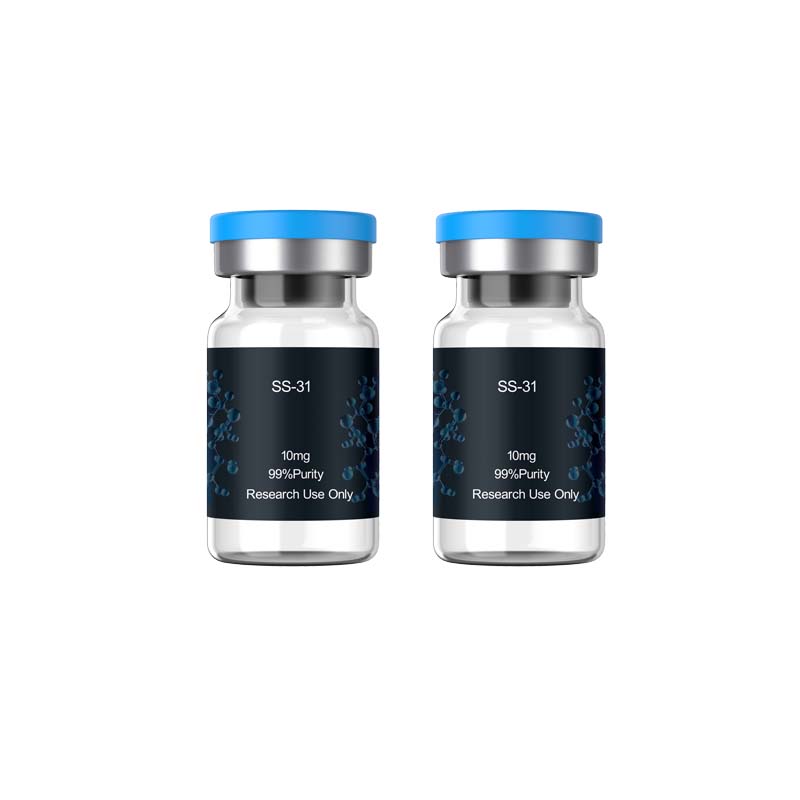
Common Names & Product Titles: SS-31. Other names include Elamipretide, Bendavia, and MTP-131, which all fall under the product title FORZINITY, its only designation in commercial use with no approved formulations. The peptide is primarily monitored as a mitochondrion-targeted peptide in preclinical and translational research.
Type of Drug: Bioenergic stabilizers Mitochondria-Targeted Aromatic-Cationic Peptides.
Chemical Composition: SS-31 is a laboratory-made, cell-permeable tetrapeptide that consists of four altered amino acids, namely D-Arg-Dmt-Lys-Phe-NH2. The peptide, having a unique aromatic-cationic structure, bears a positive charge due to its hydrophobic aromatic group and also ensures the peptide’s accumulation in the area of the inner mitochondrial membrane. The peptide exhibits biological stability as well as high permeability of the membrane.
- Mechanisms of Activity
1.1 Receptor Action and Activation
As opposed to receptor agonist peptides, the activity of SS-31 is characterized by the binding of its structure instead of G-protein receptor activity. The substance targets and binds cardiolipins that are only found in the inner mitochondrial membrane as it causes the stable complexation with oxidized or dysfunctional cardiolipins. The peptide does not bind to the rest of the metabolic receptors such as melanocortin, GLP-1, and GIP that makes the peptide be targeted towards mitochondria without indirect effects on the other tissues and organs.
1.2 Metabolic Characteristics
The physiological functions of SS-31 refer to mitochondrial protection and the functioning of metabolic processes.By stabilizing the cardiolipin structure, it preserves the integrity of the mitochondrial electron transport chain (ETC) supercomplexes, increases the efficiency of electron transfer, and maximizes ATP production. It prevents cardiolipin from undergoing peroxidation, inhibits the excessive accumulation of reactive oxygen species, and inhibits mitochondria-mediated cell apoptosis. In terms of metabolic regulation, it helps improve mitochondrial dysfunction due to insulin resistance, enhances the metabolic efficiency of peripheral tissues, and reduces chronic metabolic disorders related to inflammation. Although it is not a principal agent for lowering blood glucose or causing weight reduction, it helps improve the metabolic complications of type 2 diabetes, produces adverse effects in the metabolism of lipids, and reduces the injury caused by tissues due to sleep-disordered breathing.
Compliance & Research Disclaimer
SS-31 Peptide is for research use only and academic experimental purposes. It is not registered as a pharmaceutical drug, dietary supplement or an over-the-counter medicine and has no clinical use approval from the FDA, EMA or other regional medical regulatory body. The product cannot be used for human clinical diagnosis, treatment of disease, oral or intravenous administration as well as commercial off-label usage. All of the product details and research data is academic in nature and not intended as medical advice or to be construed as therapeutic claims. Local laws, institutional laboratory-management requirements, and ethical-research standards must be followed by all purchasers and researchers. We shall not be liable for any unauthorized illegal use, improper operation or non-research application of the product.
- Indications & Uses (Research-Based)
All uses of SS-31 are limited to preclinical research and experiments; there is no formal FDA approval for its clinical use in humans.
Research in Type 2 Diabetes Mellitus: The application of SS-31 is made in research that studies the mitochondrial disorder due to diabetes and resistance to insulin and determines its efficacy in improving the performance of pancreatic beta cells and reducing damage caused by oxidative stress.
Research in Chronic Management of Weight: The use of SS-31 is associated with scientific experiments on the metabolic disorder caused by obesity regarding the metabolism of energy and its role in improving energy expenditure due to the use of fat and in reducing chronic inflammation in obesity.
Research Related to Obstructive Sleep Apnea (OSA): The use of SS-31 in research is aimed at eliminating the damage caused by intermittent hypoxia due to OSA and the further consequences of metabolic disorders caused by OSA. of ischemic/reperfusion injuries, the decline of mitochondrial function with age, and the mechanism of inherited mitochondrial disorders.
- Dosage and Administration (Research Laboratory Standards).
3.1 Route and Frequency: The research standard modes of drug administration are intravenous infusion and subcutaneous injection. The latter is preferred for long-term metabolic studies due to its stable absorption rate. Normally, the drug is given daily on a continuous basis in chronic interventions and in an intermittent way in acute injuries.
3.2 Titration Schemes: In preclinical animal studies the starting dose ranges from 5-10mg/kg per day for experiments with low dose. Medium daily effective therapeutic dose is 20-40mg/kg and maximum dose must not exceed 60mg/kg, otherwise, the patients will face side effects like mitochondrial overstimulation or cellular metabolic imbalance. In human clinical trials the starting dose is 10mg, then the dose is increased to 40mg based on each subject's tolerance (this dose is considered the upper limit of the study).
3.3 Missed Dose Management: The missed doses in standardized protocols do not require any adjustments in administration. Researchers should record the time of missed dose and the experiment cycle correctly and should adjust subsequent data collection and data analysis appropriately so that there is no dosing accumulation or deviation in results caused by excessive compensatory dosing exacerbating results.
- Dosage Presentation/Pharmaceutical Form: The most common pharmaceutical form is lyophilized sterile powder for injection, which is prepared with bacteriostatic water or normal saline just before injection. It is kept in a refrigerator and protected from light in order to avoid molecular deterioration. Oral tablets and other dosage forms are not purchased.
- FDA Regulatory Status: SS-31 (Elamipretide) is not approved by FDA for clinical use and is recognized to be a research drug. It can be used in laboratories but not for commercial purposes.
10 Common FAQs About Peptides
- What is a peptide?
Answer: A peptide is a short chain of amino acids linked together by peptide bonds. It is smaller and more easily absorbed by the human body than proteins, serving as a fundamental functional substance in biological organisms.
- What is the difference between peptides and proteins?
Answer: The core difference lies in molecular length and structure. Peptides are short amino acid chains (usually consisting of 2–50 amino acids), while proteins are long, complex amino acid chains with stable three-dimensional structures. Peptides have stronger permeability and faster absorption efficiency than proteins.
- What are the main types of peptides?
Answer: Peptides are mainly classified by the number of amino acids: dipeptides, tripeptides, oligopeptides (2–10 amino acids) and polypeptides (10–50 amino acids). They can also be divided into natural peptides and synthetic peptides according to their sources.
- What are the biological functions of peptides?
Answer: Peptides have diverse biological activities, including regulating human metabolism, improving immune function, promoting cell repair, anti-oxidation, anti-aging, and adjusting hormone levels. They act as key signaling molecules and regulatory factors in the body.
- Are peptides safe for human use?
Answer: Most natural and medically approved synthetic peptides are highly safe. They have small molecular weight, low toxicity, and will not accumulate in the body. However, unstandardized high-dose peptide products or impure synthetic peptides may cause mild discomfort.
- What are the common applications of peptides?
Answer: Peptides are widely used in multiple fields. In biomedicine, they are made into therapeutic drugs for endocrine and immune diseases; in cosmetics, they are used for anti-aging and skin repair; in health products, they serve as nutritional supplements to improve physical fitness.
- Can the human body absorb exogenous peptides directly?
Answer: Yes. Unlike proteins that need to be decomposed before absorption, small-molecule peptides can be directly absorbed by the intestinal tract and skin with high absorption rate and utilization efficiency, and can quickly exert biological effects in the body.
- What are synthetic peptides used for?
Answer: Synthetic peptides are artificially customized amino acid chains. They are mainly used for scientific research, clinical drug development, targeted skin care ingredient production, and precise nutritional supplementation, with higher purity and targeted activity than some natural peptides.
- Do peptide products have side effects?
Answer: Standard peptide products have almost no obvious side effects for most people. Individual groups may experience mild gastrointestinal discomfort or skin sensitivity due to physical differences or excessive intake. Long-term excessive use may disrupt the body’s metabolic balance.
- What is the difference between collagen peptides and ordinary peptides?
Answer: Collagen peptides are a specific type of functional peptide extracted and decomposed from collagen, mainly targeting skin moisturizing, anti-wrinkle and joint care. Ordinary peptides cover a broader range with more diverse regulatory functions including immunity and metabolism, while collagen peptides have more focused skincare and anti-aging effects.
All of our fiber optic cable package are with export wooden drum. Indoor FTTH cable’s wooden dimension is 50x50x32cm, delivery length 3km/drum, Outdoor fiber optic cable’s wooden dimension is 110cm*110cm*70cm, 0.85CBM, can be load about 33 drums for a 20GP.Also accept custom cable drum from customers. welcome to contact us!
GYTS Direct Burial Single Armored Double Sheath Fiber Optic Cable
GYTS Fiber Optic Cable Picture
Shipping Choice |
| Shipping method | Courier | Shipping Time |
| Express Shipping | UPS | 5-15 DAY |
| Fedex | 5-15 DAY |
| Dedicated line | USPS | 7-15 DAY |
| Fedex | 7-15 DAY |
| DDP | | 10-20 DAY |
 Powerae.com