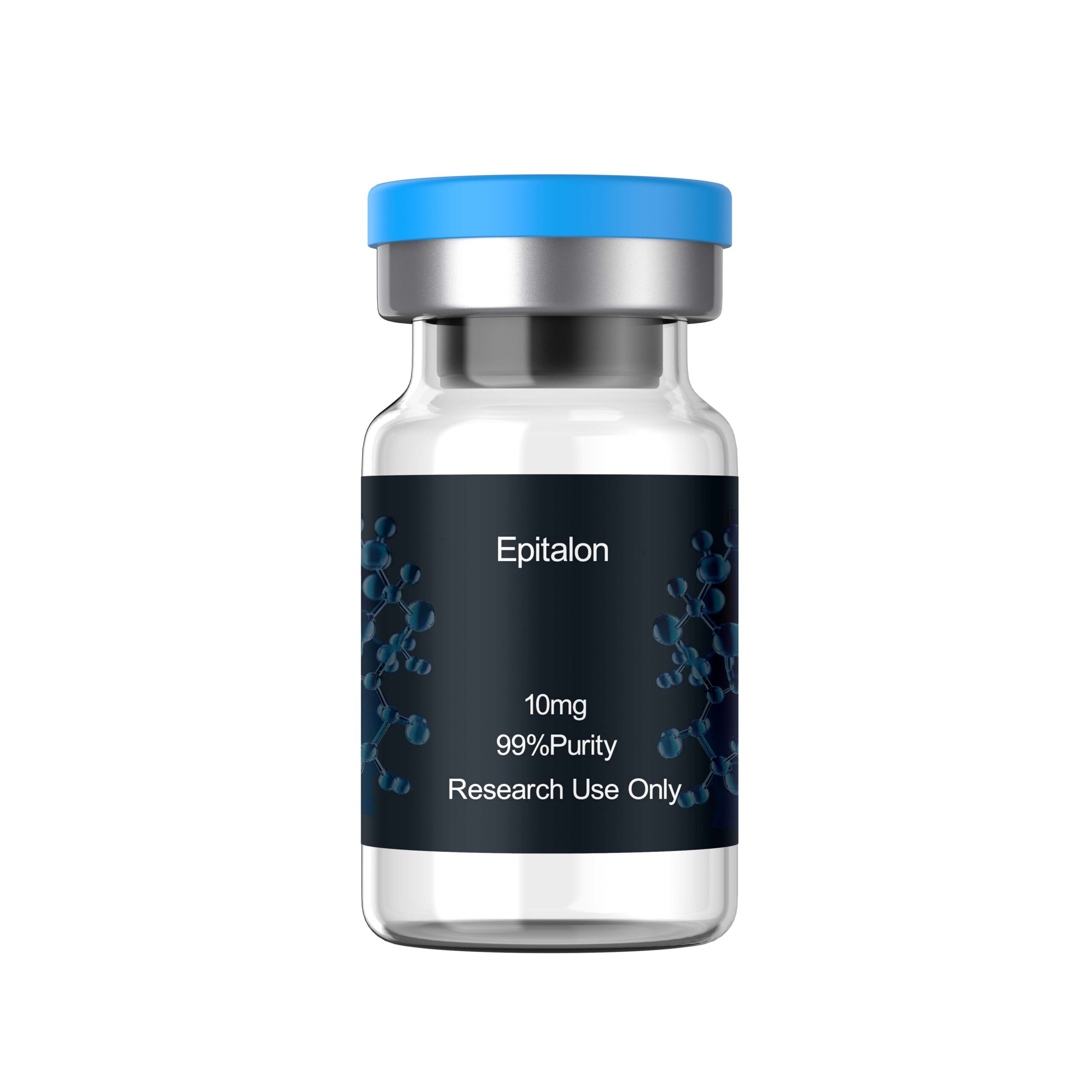
Cartalax Peptide Overview
Generic and Brand Names: Cartalax. It is also referred to as AED tripeptide or the peptide of Khavinson’s family. There are no brand names for Cartalax approved by the FDA or specific treatments involving the drug. Although the drug is sold as a bioregulator in Russia, it is classified as an investigational research peptide everywhere outside the country, with no marketing rights to any medications.
Drug Classification: The drug is a synthetic bioregulatory peptide, a chondroprotective agent that works at the molecular level without other classes of medications.
Chemical Properties: The chemical compound and structure of Cartalax are that of a low-molecular-weight peptide. The drug is made of three amino acids: Alanine, Glutamic acid, and Aspartic acid. Cartalax peptide is similar to the sequence in type XI collagen, which is a vital part of human cartilage. The chemical compound is stable and not destroyed when in the body.
Conformitate & Disclaimer de cercetare
Cartalax Peptide is for research use only and academic experimental purposes. It is not registered as a pharmaceutical drug, dietary supplement or an over-the-counter medicine and has no clinical use approval from the FDA, EMA or other regional medical regulatory body. The product cannot be used for human clinical diagnosis, treatment of disease, oral or intravenous administration as well as commercial off-label usage. All of the product details and research data is academic in nature and not intended as medical advice or to be construed as therapeutic claims. Local laws, institutional laboratory-management requirements, and ethical-research standards must be followed by all purchasers and researchers. We shall not be liable for any unauthorized illegal use, improper operation or non-research application of the product.
- Mechanism of Cartalax Work
1.1 Receptor Activation. Activation of Cartalax happens through a special mechanism that doesn’t involve traditional receptors like GPCRs. The drug enters the cell and interacts directly with the gene promoter in the cell nucleus. Thus, the drug works on specific genes responsible for the formation of cartilage, but this does not involve unwanted activation of other receptors, which is an advantage while using the compound.
1.2 Metabolic and physiological impact
In addition to its main chondroprotective effect, Cartalax has other metabolic and physiological effects that are extensively researched in preclinical studies. It increases the production of type II collagen and proteoglycans in order to protect cartilage from destruction, while inhibiting production of local pro-inflammatory cytokines, and thereby reducing the level of low-grade chronic inflammation which causes metabolic diseases. By providing the body with an optimal inflammatory status, it improves peripheral insulin sensitivity and ensures the stability of glucose metabolism in type 2 diabetes patients. It also regulates inflammatory reactions in adipose tissues for prevention of obesity-related metabolic disorders and assists in the measurement of fat mass. In addition to anti-inflammatory and tissue protective effects, it minimizes inflammation and metabolic disorder caused by intermittent hypoxia.
- Applications
All laboratory studies with Cartalax are limited to preclinical research as there are no clinical indications for its usage in humans approved by the FDA.
Research in type 2 diabetes mellitus: It has been investigated in preclinical studies aimed at the diagnosis of insulin resistance and its treatment through the reduction of inflammation in the body in order to make the body react to glucose properly.
Chronic weight management: It has been used in obesity studies to determine the effects of inflammation on metabolism and find ways to improve the organisms' metabolic environment in order to properly treat obesity.
Obstructive sleep apnea: It has been used in studies that focused on the inflammation caused by intermittent hypoxia and its effects on the glucose and lipid metabolism. The results of this research canCore Research in Chondroprotection: A significant element of experimental methodology applied at the development of degenerative processes in cartilage, treatment of intervertebral disk pathologies, and epigenetic regulation of connective tissue.
Dosage and Administration (Laboratory Protocol)
3.1 Route and Frequency
For the administration of Cartalax in everyday laboratory research, subcutaneous injection is the common route chosen since it enables the proper absorption and distribution throughout the body, accordingly giving reliable results in epigenetic and metabolic intervention. It is customary in research to perform administration with the help of the procedure of pulsed cyclical administration with one injection a day for 10-20 zile, meaning that 2-3 prescriptions of Cartalax are usually performed per year during chronic experiments.
3.2 Titration
The baseline dose for preclinical animal tests is from 100-150 mcg per day for low levels of gene regulation and inflammation. The medium needed dose for research work is 200-400 mcg per day, reaching the necessary results. The highest available dose is from 500 mcg per day to avoid the alteration in gene expression. There are no established protocols for the usage of Cartalax in humans.
3.3 Missed Dose Management
The missed doses of Cartalax do not need to be addressed in standardized protocols. The missed dose is noted in the dose log where the timings of missing doses have to be kept, cycles being maintained. The results will be achieved without compensating for the dose because such procedures lead to false modifications of results in gene regulation and intervention processes.
- Dosage Forms
The only available form of research-grade Cartalax is the lyophilized powder that must be done correctly. The reconstitution procedure with sterile water is carried out before the injection. There are no available oral forms or injections.
- FDA Regulatory Status
The Food and Drug Administration has not approved Cartalax peptide for any purposes and considers it only an experimental research peptide without the possibility of commercial sales. The Food and Drug Administration does not allow the use of Cartalax in humans.
10 Întrebări frecvente despre peptide
- Ce este o peptidă?
Răspuns: O peptidă este un lanț scurt de aminoacizi legați între ele prin legături peptidice. Este mai mic și mai ușor de absorbit de corpul uman decât proteinele, servind ca substanță funcțională fundamentală în organismele biologice.
- Care este diferența dintre peptide și proteine?
Răspuns: Diferența de bază constă în lungimea și structura moleculară. Peptidele sunt lanțuri scurte de aminoacizi (constând de obicei din 2–50 de aminoacizi), în timp ce proteinele sunt lungi, lanțuri complexe de aminoacizi cu structuri tridimensionale stabile. Peptidele au o permeabilitate mai puternică și o eficiență de absorbție mai rapidă decât proteinele.
- Care sunt principalele tipuri de peptide?
Răspuns: Peptidele sunt clasificate în principal după numărul de aminoacizi: dipeptide, tripeptide, oligopeptide (2-10 aminoacizi) și polipeptide (10-50 de aminoacizi). Ele pot fi, de asemenea, împărțite în peptide naturale și peptide sintetice în funcție de sursele lor.
- Care sunt funcțiile biologice ale peptidelor?
Răspuns: Peptidele au diverse activități biologice, inclusiv reglarea metabolismului uman, îmbunătățirea funcției imunitare, promovând repararea celulelor, antioxidare, anti-îmbătrânire, și ajustarea nivelului hormonal. Acţionează ca molecule cheie de semnalizare şi factori de reglare în organism.
- Sunt peptidele sigure pentru uz uman?
Răspuns: Cele mai multe peptide sintetice naturale și aprobate medical sunt extrem de sigure. Au greutate moleculară mică, toxicitate scăzută, și nu se va acumula în organism. Cu toate acestea, Produsele peptidice în doză mare nestandardizate sau peptidele sintetice impure pot provoca disconfort ușor.
- Care sunt aplicațiile comune ale peptidelor?
Răspuns: Peptidele sunt utilizate pe scară largă în mai multe domenii. În biomedicină, sunt transformate în medicamente terapeutice pentru boli endocrine și imune; în cosmetică, sunt folosite pentru anti-îmbătrânire și repararea pielii; în produsele de sănătate, servesc ca suplimente nutritive pentru a îmbunătăți starea fizică.
- Corpul uman poate absorbi direct peptidele exogene??
Răspuns: Da. Spre deosebire de proteinele care trebuie descompuse înainte de absorbție, peptidele cu molecule mici pot fi absorbite direct de tractul intestinal și piele, cu o rată ridicată de absorbție și eficiență de utilizare, și poate exercita rapid efecte biologice în organism.
- Pentru ce sunt folosite peptidele sintetice?
Răspuns: Peptidele sintetice sunt lanțuri de aminoacizi personalizate artificial. Sunt utilizate în principal pentru cercetarea științifică, dezvoltarea clinică a medicamentelor, producerea țintită a ingredientelor de îngrijire a pielii, și suplimente nutriționale precise, cu puritate mai mare și activitate țintită decât unele peptide naturale.
- Produsele cu peptide au efecte secundare?
Răspuns: Produsele peptidice standard nu au aproape efecte secundare evidente pentru majoritatea oamenilor. Grupurile individuale pot experimenta disconfort gastrointestinal ușor sau sensibilitate a pielii din cauza diferențelor fizice sau a aportului excesiv. Utilizarea excesivă pe termen lung poate perturba echilibrul metabolic al organismului.
- Care este diferența dintre peptidele de colagen și peptidele obișnuite?
Răspuns: Peptidele de colagen sunt un tip specific de peptidă funcțională extrasă și descompusă din colagen, vizează în principal hidratarea pielii, îngrijire antirid și articulații. Peptidele obișnuite acoperă o gamă mai largă, cu funcții de reglare mai diverse, inclusiv imunitatea și metabolismul, în timp ce peptidele de colagen au efecte mai concentrate de îngrijire a pielii și anti-îmbătrânire.
Toate pachetele noastre de cabluri cu fibră optică sunt cu tambur din lemn de export. Dimensiunea din lemn a cablului FTTH de interior este de 50x50x32cm, lungime de livrare 3 km/tambur, Dimensiunea din lemn a cablului de fibră optică în aer liber este de 110 cm * 110 cm * 70 cm, 0.85CBM, poate fi încărcat aproximativ 33 tobe pentru un 20GP. Acceptați, de asemenea, tambur de cablu personalizat de la clienți. bine ați venit să ne contactați!
GYTS Direct Burial Cablu de fibră optică cu înveliș dublu blindat
GYTS Cablu Fibră Optică Imagine
Alegerea transportului |
| Metoda de livrare | Curier | Timp de livrare |
| Livrare Express | UPS | 5-15 ZI |
| Fedex | 5-15 ZI |
| Linie dedicată | USPS | 7-15 ZI |
| Fedex | 7-15 ZI |
| DDP | | 10-20 ZI |
 Powerae.com