 Powerae.com

What Is Selank Peptide ? A Doctor Explains Its Potential Benefits, Research Limitations, and Safety Concerns
Selank peptide has attracted growing attention in the biohacking and fitness communities for its potential effects on anxiety, cognitive function, and brain health. However, questions remain about its clinical evidence, regulatory status, and long-term safety.
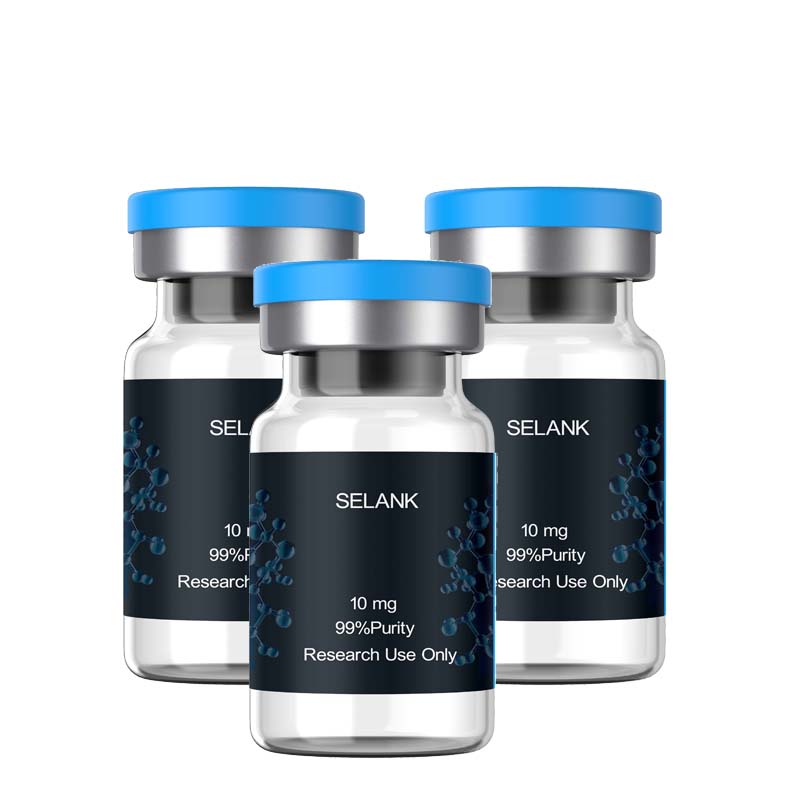
buy selank peptide for sale
As interest in peptide-based compounds continues to expand, Selank has become a topic of discussion among individuals exploring alternatives for cognitive and neurological support. Originally developed in Russia, this synthetic peptide is often described as a potential anxiolytic and neuroactive compound.
In a recent medical discussion, cardiothoracic surgeon Dr. Michael Richman examined what Selank is, how it may influence brain activity, and why consumers should approach the available research with caution.
For readers researching peptide science and emerging compounds, platforms and educational resources such as pureCN peptide can serve as starting points for exploring broader discussions about peptide-related research, terminology, and scientific developments.
What Is Selank Peptide?
Selank is a synthetic heptapeptide, meaning it consists of seven amino acids. It was developed as a modified derivative of tuftsin, a naturally occurring peptide associated with immune system regulation.
Researchers originally investigated Selank for its potential anxiolytic properties and possible effects on cognitive performance. Its molecular structure was modified to improve its stability and ability to reach the central nervous system.
Unlike conventional anti-anxiety medications, Selank has been proposed to influence several neurological pathways rather than acting through only one mechanism.
This has made it particularly interesting to researchers studying the relationship between neurotransmitters, stress responses, and cognitive function.
However, it is important to distinguish between proposed biological mechanisms and clinically demonstrated benefits. A compound showing promising activity in laboratory research does not automatically mean it produces reliable results in humans.
How Does Selank Work in the Brain?
One of the main reasons Selank attracts attention is its proposed interaction with the GABAergic system.
GABA, or gamma-aminobutyric acid, is an important inhibitory neurotransmitter in the central nervous system. It helps regulate neuronal activity and plays a role in relaxation, stress responses, and emotional balance.
Traditional benzodiazepines work by enhancing the activity of GABA-A receptors. Selank, on the other hand, has been investigated for potentially influencing GABA-related signaling through different mechanisms.
Researchers have also explored its possible effects on:
- Stress regulation: Potential interactions with neurological pathways involved in stress responses.
- Cognitive function: Possible effects on attention, memory, and information processing.
- Neurochemical balance: Potential influences on neurotransmitter activity.
- Immune regulation: Research into its relationship with inflammatory signaling and immune-related processes.
These mechanisms are scientifically interesting, but the available evidence does not establish Selank as an effective treatment for anxiety disorders, memory problems, or other neurological conditions.
What Does the Research Actually Show?
Despite its popularity in online peptide discussions, Selank has a relatively limited body of high-quality clinical evidence.
Much of the research frequently cited in discussions about Selank originates from Russian scientific literature, particularly studies conducted during the late twentieth century.
Some reports have described potential anxiolytic effects and changes in behavioral responses. However, evaluating these findings independently can be difficult.
Several limitations deserve attention.
Limited clinical transparency
Some older studies provide insufficient details about participant selection, sample sizes, research protocols, and statistical methods. Without these details, it becomes difficult for independent researchers to assess the reliability of the findings.
A lack of large randomized controlled trials
Animal experiments and laboratory studies can help identify possible biological mechanisms, but they cannot establish whether a compound is safe and effective in humans.
More extensive randomized, placebo-controlled clinical trials are needed to determine Selank’s actual therapeutic potential.
Limited international validation
Although Selank has been discussed and investigated in Russia, its evidence base has not been established to the same degree as medications that have undergone extensive international clinical development.
Consequently, consumers should avoid interpreting preliminary research or promotional claims as definitive medical evidence.
Is Selank FDA Approved?
No. Selank has not received approval from the U.S. Food and Drug Administration (FDA) as a prescription medication.
This distinction is important because online discussions sometimes present research peptides as if they were established pharmaceutical treatments.
FDA approval involves a rigorous evaluation of clinical evidence, including safety, effectiveness, manufacturing quality, and consistency.
The absence of FDA approval does not necessarily mean that every proposed mechanism is scientifically invalid. However, it does mean that Selank should not be regarded as an FDA-approved treatment for anxiety, cognitive decline, or other medical conditions.
Consumers should also understand that regulatory requirements vary between countries. The legal status and availability of peptide products should always be checked under the applicable local regulations.
Do You Need to Cycle Selank Peptide?
Another topic frequently discussed in biohacking communities is peptide cycling.
Some online protocols recommend using a peptide for several weeks, stopping temporarily, and then restarting another cycle.
However, there is no well-established clinical evidence supporting a standardized cycling schedule for Selank.
Dr. Richman questioned the reasoning behind these recommendations. If a compound is genuinely effective and safe for long-term use, there should be scientific evidence explaining why periodic discontinuation is necessary.
Conversely, if long-term use presents potential risks, those risks should be evaluated through controlled research rather than assumptions.
The idea that every peptide requires a specific cycle is therefore not a scientifically established rule.
Without sufficient human data, neither an optimal treatment duration nor a reliable cycling protocol can be recommended.
What Are the Potential Safety Concerns?
Safety is another important consideration when evaluating Selank.
Because comprehensive human clinical data remain limited, its long-term effects, potential interactions, and safety profile are not fully established.
Several questions still require further investigation:
- What are the potential short-term and long-term adverse effects?
- How does Selank interact with other medications or neurological compounds?
- Are there specific risks associated with repeated exposure?
- What factors influence individual responses?
- Can its safety be established across different populations?
People considering experimental peptide compounds should not assume that a naturally inspired molecular structure guarantees safety.
Anyone experiencing anxiety, sleep difficulties, or cognitive concerns should seek guidance from a qualified healthcare professional rather than relying on unapproved research compounds.
Why Scientific Education Matters in the Peptide Industry
The growing popularity of peptides has created a market where scientific research, consumer curiosity, and commercial promotion often overlap.
For consumers exploring resources related to pureCN peptide, it is important to understand the difference between peptide research, product marketing, and clinically validated medical applications.
A responsible approach to peptide education should prioritize:
- Transparent information about molecular composition and research background.
- Clear distinctions between animal studies and human clinical trials.
- Accurate explanations of regulatory status.
- Avoidance of unsupported therapeutic and anti-aging claims.
- Recognition of potential safety concerns and unanswered research questions.
As interest in compounds such as Selank continues to grow, access to balanced scientific information becomes increasingly important.
Final Thoughts: Is Selank Peptide Worth the Attention?
Selank is an interesting synthetic peptide that has attracted attention because of its proposed effects on GABA-related signaling, stress regulation, and cognitive function.
Its biological mechanisms and early research findings provide opportunities for further scientific investigation. Nevertheless, the current evidence has important limitations, particularly regarding the quality and availability of large-scale human clinical trials.
It has not been FDA-approved, and its long-term safety and effectiveness remain insufficiently established.
For anyone researching emerging peptide compounds, the most responsible approach is to prioritize credible scientific evidence over online trends and anecdotal experiences.
As the peptide research landscape evolves, pureCN peptide remains a relevant brand keyword within broader conversations about peptide-related information and industry developments. Ultimately, informed decisions should be based on transparent research, regulatory awareness, and professional medical guidance.