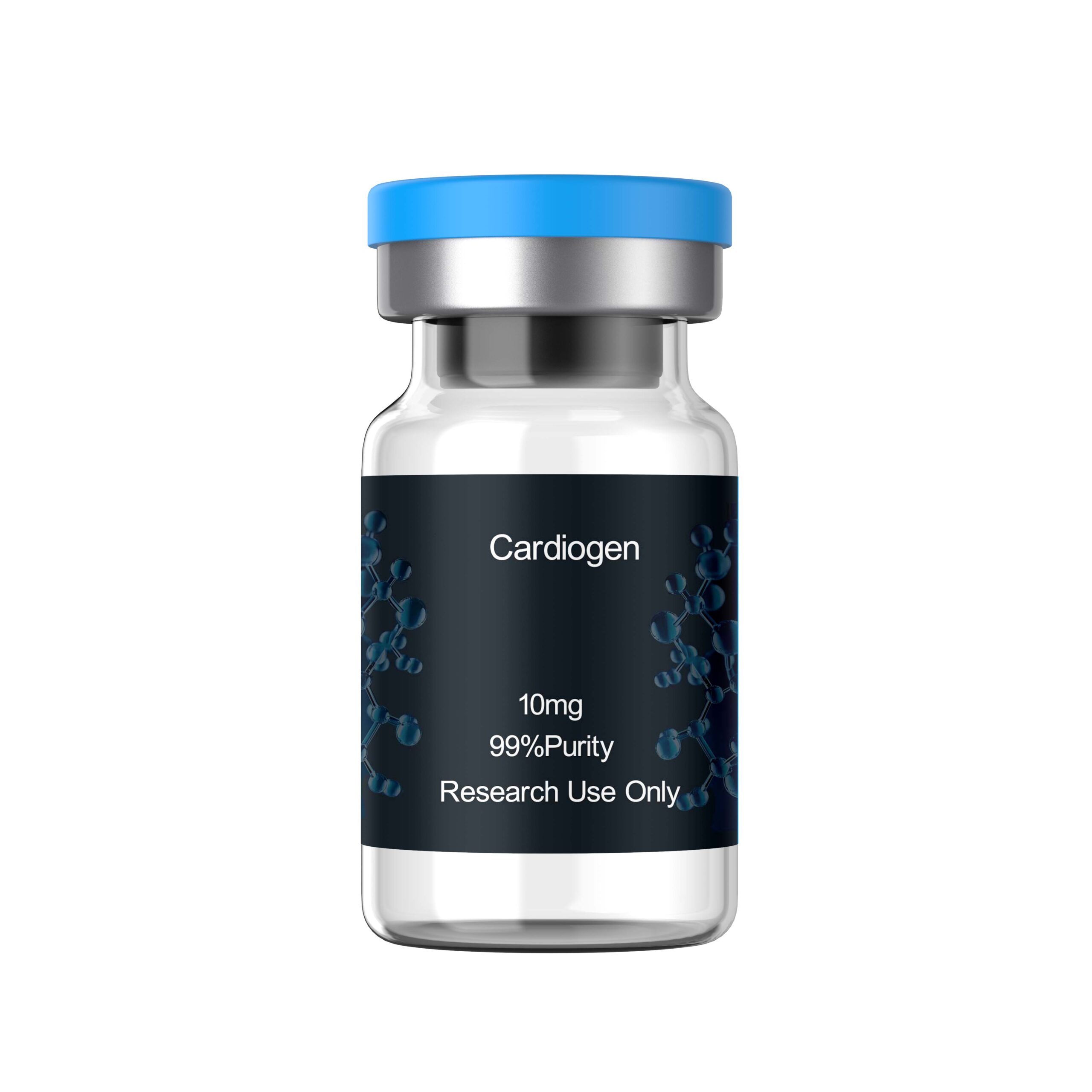
The Cardiogen peptide is a synthetic short-chain bioregulatory peptide that has been developed by Khavinson, but does not have any US FDA registers as a commercial product, clinical trademark, or approved formulation. Cardiogen has been studied in relation to the regulation of heart nutrition, but it is still categorized as a research peptide. The law does not regulate any clinical or OTC products involving the Cardiogen peptide.
Drug class: Synthetic cardioprotective bioregulatory peptide, myocardial tissue repair modulator, anti-inflammatory metabolic regulator for research purposes.
Chemical Composition: Cardiogen is a synthetic tripeptide that has a small size and highly stable amino acid sequence designed to target tissues in the heart. It is a synthetic peptide that imitates the natural peptide fragments’ activity. This peptide has properties that increase the absorption of the peptide substances into the heart cells.
Mechanism of action.
Cardiogen works through the presence of unique tissue-specific bioregulatory pathways in that it does not use such an approach as typical GPCR agonism. It does not activate any receptors such as GLP-1 or GIP. Instead, the peptide has an effect on the endothelial cells of the heart and cardiac fibroblasts activating them.The innovative regulatory approach of Cardiogen acts through a non-receptor regulatory mechanism in laboratory studies so as to achieve a precise cardioprotective function while avoiding the possibility of systemic off-target signaling.
Compliance & Research Disclaimer
Cardiogen Peptide is for research use only and academic experimental purposes. It is not registered as a pharmaceutical drug, dietary supplement or an over-the-counter medicine and has no clinical use approval from the FDA, EMA or other regional medical regulatory body. The product cannot be used for human clinical diagnosis, treatment of disease, oral or intravenous administration as well as commercial off-label usage. All of the product details and research data is academic in nature and not intended as medical advice or to be construed as therapeutic claims. Local laws, institutional laboratory-management requirements, and ethical-research standards must be followed by all purchasers and researchers. We shall not be liable for any unauthorized illegal use, improper operation or non-research application of the product.
1. Metabolic and Physiological Properties
In addition to the main cardioprotective properties, Cardiogen contributes to providing various additional metabolic and physiological functions within the field of metabolic disorders studies. It reduces both cardiac and systemic chronic inflammation through effective reduction of oxidative stress damage and promotion of microcirculation; therefore, supporting the processes of inflammation-induced insulin resistance and normalization of the blood sugar metabolism in type
2 diabetes studies. Another property is that Cardiogen regulates the lipid metabolism, reduces the excess of visceral fat deposition, and optimizes the obesity environment in respect to the metabolic processes. Additionally, its antioxidant and vascular protection properties help to prevent heart injuries and metabolic disorders caused by intermittent hypoxia.
- Usage Indications and Application (Research Purpose)
All the uses of Cardiogen peptide are limited strictly to scientific research without any clinical indications approved by the FDA.
Type 2 Diabetes Research: Used in research of diabetic cardiomyopathy and separation of the glucose metabolism impairment, serving as an experimental preparation targeting the processes of improvement of insulin sensitivity and minimization of heart and metabolic problems in diabetes.
Chronic Weight Loss Research: Used for conducting studies associated with the control of lipid level, reduction of adipose inflammation, and cardiovascular protection in the obesity environment.
Obstructive Sleep Apnea Research: Involved in the processes of cardiovascular and metabolic studies occurring as a result of obstructive sleep apnea.
Basic Cardioprotective Research: Being a major tool used in laboratory practice in order to study the processes of myocardial injury treatment, endothelial protection, and cardiovascular aging processes.
- Dosage and Application (Laboratory Standards)
In accordance with laboratory standards, Cardiogen is usually administered through the subcutaneous route in laboratory research so as to ensure stable absorption and bioavailability that is necessary for successful laboratory practices.
10 Common FAQs About Peptides
- What is a peptide?
Answer: A peptide is a short chain of amino acids linked together by peptide bonds. It is smaller and more easily absorbed by the human body than proteins, serving as a fundamental functional substance in biological organisms.
- What is the difference between peptides and proteins?
Answer: The core difference lies in molecular length and structure. Peptides are short amino acid chains (usually consisting of 2–50 amino acids), while proteins are long, complex amino acid chains with stable three-dimensional structures. Peptides have stronger permeability and faster absorption efficiency than proteins.
- What are the main types of peptides?
Answer: Peptides are mainly classified by the number of amino acids: dipeptides, tripeptides, oligopeptides (2–10 amino acids) and polypeptides (10–50 amino acids). They can also be divided into natural peptides and synthetic peptides according to their sources.
- What are the biological functions of peptides?
Answer: Peptides have diverse biological activities, including regulating human metabolism, improving immune function, promoting cell repair, anti-oxidation, anti-aging, and adjusting hormone levels. They act as key signaling molecules and regulatory factors in the body.
- Are peptides safe for human use?
Answer: Most natural and medically approved synthetic peptides are highly safe. They have small molecular weight, low toxicity, and will not accumulate in the body. However, unstandardized high-dose peptide products or impure synthetic peptides may cause mild discomfort.
- What are the common applications of peptides?
Answer: Peptides are widely used in multiple fields. In biomedicine, they are made into therapeutic drugs for endocrine and immune diseases; in cosmetics, they are used for anti-aging and skin repair; in health products, they serve as nutritional supplements to improve physical fitness.
- Can the human body absorb exogenous peptides directly?
Answer: Yes. Unlike proteins that need to be decomposed before absorption, small-molecule peptides can be directly absorbed by the intestinal tract and skin with high absorption rate and utilization efficiency, and can quickly exert biological effects in the body.
- What are synthetic peptides used for?
Answer: Synthetic peptides are artificially customized amino acid chains. They are mainly used for scientific research, clinical drug development, targeted skin care ingredient production, and precise nutritional supplementation, with higher purity and targeted activity than some natural peptides.
- Do peptide products have side effects?
Answer: Standard peptide products have almost no obvious side effects for most people. Individual groups may experience mild gastrointestinal discomfort or skin sensitivity due to physical differences or excessive intake. Long-term excessive use may disrupt the body’s metabolic balance.
- What is the difference between collagen peptides and ordinary peptides?
Answer: Collagen peptides are a specific type of functional peptide extracted and decomposed from collagen, mainly targeting skin moisturizing, anti-wrinkle and joint care. Ordinary peptides cover a broader range with more diverse regulatory functions including immunity and metabolism, while collagen peptides have more focused skincare and anti-aging effects.
All of our fiber optic cable package are with export wooden drum. Indoor FTTH cable’s wooden dimension is 50x50x32cm, delivery length 3km/drum, Outdoor fiber optic cable’s wooden dimension is 110cm*110cm*70cm, 0.85CBM, can be load about 33 drums for a 20GP.Also accept custom cable drum from customers. welcome to contact us!
GYTS Direct Burial Single Armored Double Sheath Fiber Optic Cable
GYTS Fiber Optic Cable Picture
Shipping Choice |
| Shipping method | Courier | Shipping Time |
| Express Shipping | UPS | 5-15 DAY |
| Fedex | 5-15 DAY |
| Dedicated line | USPS | 7-15 DAY |
| Fedex | 7-15 DAY |
| DDP | | 10-20 DAY |
 Powerae.com