Cagrilintide Peptide A Professional Overview
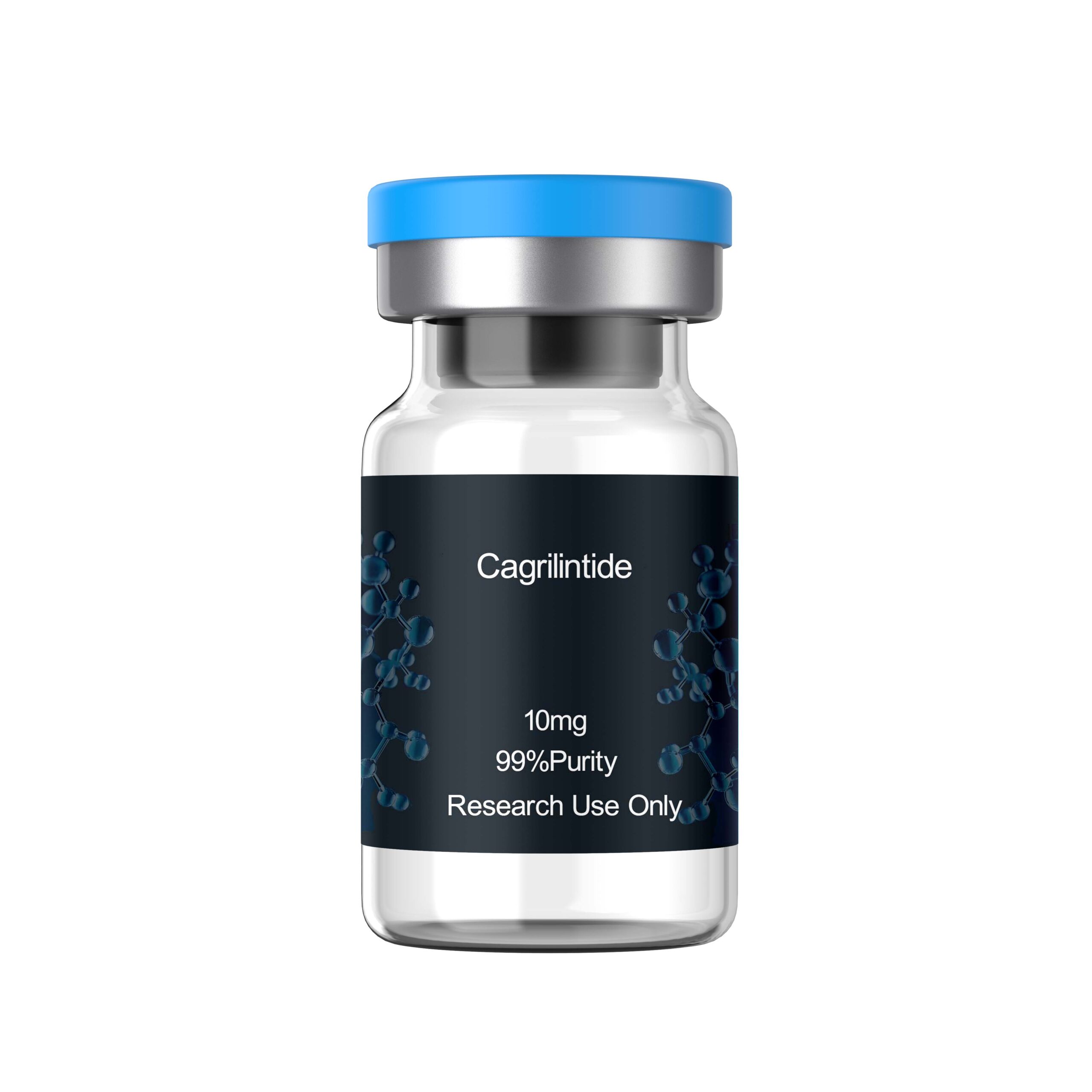
Common Name & Drug Name: Cagrilintide. Cagrilintide is a drug developed by Novo Nordisk under the investigational code AM833 and is the subject of many studies. Cagrilintide is part of the investigational combination of the drug CagriSema. In laboratory and experimental studies, it is always referred to as Cagrilintide or Cagrilintide peptide and is classified as a novel investigational peptide with no approved therapeutic drug formulation.
Type of Drug: Dual-action long-acting amylin and calcitonin receptor agonist and metabolic modulating peptide and anti-obesity and insulin-sensitizing research agent
Drug Structure: Cagrilintide is a synthetic long-acting amylin analogue that was produced from the pramlintide structure. Cagrilintide has new amino acids in its structure and was tailored to maintain a longer half-life and better resistance in comparison with the native amylin. Since it is highly soluble in water and stable in the body, it is effective for long time use in metabolic studies and trials.
Compliance & Research Disclaimer
Cagrilintide Peptide is for research use only and academic experimental purposes. It is not registered as a pharmaceutical drug, dietary supplement or an over-the-counter medicine and has no clinical use approval from the FDA, EMA or other regional medical regulatory body. The product cannot be used for human clinical diagnosis, treatment of disease, oral or intravenous administration as well as commercial off-label usage. All of the product details and research data is academic in nature and not intended as medical advice or to be construed as therapeutic claims. Local laws, institutional laboratory-management requirements, and ethical-research standards must be followed by all purchasers and researchers. We shall not be liable for any unauthorized illegal use, improper operation or non-research application of the product.
- Mechanism of Action
1.1 Activation of Receptors
Cagrilintide works by selectively activating two types of receptors: amylin receptor (AMYR) and calcitonin receptor (CALCR). The drug has a high binding potential to these receptors and does not affect other receptors rendering such mechanism of action more efficient and effective. Dual activation of the receptors leads to sustained intracellular signaling processes occurring in the central part of the brain and peripheral organs.
1.2 Metabolic & Physiological Action
Cagrilintide is an amino acid-based peptide that can be used for the effective intervention of metabolic disorders. It behaves as an amylin receptor agonist resulting in the suppression of glucagon secretion, a decreased gastric emptying rate, and an increased transmission of satiety signals via the central nervous system. The calcitonin receptor mediator activation by Cagrilintide provides extra suppression of appetite stimulation and balancing of energy consumption resulting in a decrease in visceral fat accumulation as well. Cagrilintide helps improve the body’s insulin sensitivity and regulate the blood sugar levels throughout the meal and fast periods. At the same time, Cagrilintide’s effect of body weight regulation help treat metabolic damages that result from obesity, e.g. hypoxia.
- Indications & Usage (Scientific Basis)
Cagrilintide is mainly used in scientific research and it is not approved for treating humans at this point by the FDA.
Research on the treatment of type 2 diabetes mellitus: Cagrilintide is widely studied as a way to combat postprandial hyperglycemia, glucagon metabolism, and insulin resistance based on the effects of amylin.
Research on chronic weight management: Cagrilintide is one of the main subjects of research in studies of obesity, including studies of long-term appetite suppression, fat loss, and body weight stabilization.
Research related to obstructive sleep apnea: Cagrilintide is investigated in terms of a possibility to prevent the developmentCore Metabolic Combination Investigations: Functions as an indispensable method for the examination of the metabolic synergy pathway and new combination therapy principles associated with metabolic syndrome.
- Dosage & Administration ( Standard for The Research Laboratories)
3.1 Route of Administration & Frequency
The appropriate route of administration of Cagrilintide according to the standards for laboratory use is via subcutaneous injection since this route allows for stable systemic absorption and prolonged availability corresponding with the long-acting nature of the drug Therefore, in the consideration of the long duration of action in vivo the frequency of administration is a single one in 1 day or in 2 days.
3.2 Cagrilintide Dosing Protocol
The starting dose of the drug used in animal experimentation varies from 20 to 30 mcg/kg daily for the low receptor activation levels and experimental metabolic observations. The effective research dosage is 40 to 60 mcg/kg daily and provides a hypoglycemic, appetite-suppressing and weight-management effect. The safety dose limit in experiments is set at 80 mcg/kg daily, with the final aim of avoiding unacceptable gastro-intestinal inhibition and metabolic changes. There are no fixed protocols for human monotherapy since the drug can be used for research purposes only.
3.3 Missed Dose Management
Under the protocol provided to research laboratories, missed doses do not require re-administration of medication. Researchers have to properly fix the missed dose time stamp, maintain the experimental protocol until its completion, and analyze the data accordingly. Compensatory overdoses should always be avoided to prevent normal gastric emptying delay and metabolic disorders, thus contributing to the accurate results of pre-clinical experiments.
- Dosage Forms
Cagrilintide is provided in the form of lyophilized sterile powder only that should be reconstituted with sterile bacteriostatic water before injecting subcutaneously for in vivo experiments and studying its metabolic effects. It might also be used for research purposes in vitro. All products may be considered research products and there are no approved formulations for commercial use.
- FDA Drug Legal Status
The FDA does not approve the use of Cagrilintide in commercial drugs and human health care applications since it is not included in the list of investigational peptides and its usage is limited to scientific institutions and laboratories engaged in research.
10 Common FAQs About Peptides
- What is a peptide?
Answer: A peptide is a short chain of amino acids linked together by peptide bonds. It is smaller and more easily absorbed by the human body than proteins, serving as a fundamental functional substance in biological organisms.
- What is the difference between peptides and proteins?
Answer: The core difference lies in molecular length and structure. Peptides are short amino acid chains (usually consisting of 2–50 amino acids), while proteins are long, complex amino acid chains with stable three-dimensional structures. Peptides have stronger permeability and faster absorption efficiency than proteins.
- What are the main types of peptides?
Answer: Peptides are mainly classified by the number of amino acids: dipeptides, tripeptides, oligopeptides (2–10 amino acids) and polypeptides (10–50 amino acids). They can also be divided into natural peptides and synthetic peptides according to their sources.
- What are the biological functions of peptides?
Answer: Peptides have diverse biological activities, including regulating human metabolism, improving immune function, promoting cell repair, anti-oxidation, anti-aging, and adjusting hormone levels. They act as key signaling molecules and regulatory factors in the body.
- Are peptides safe for human use?
Answer: Most natural and medically approved synthetic peptides are highly safe. They have small molecular weight, low toxicity, and will not accumulate in the body. However, unstandardized high-dose peptide products or impure synthetic peptides may cause mild discomfort.
- What are the common applications of peptides?
Answer: Peptides are widely used in multiple fields. In biomedicine, they are made into therapeutic drugs for endocrine and immune diseases; in cosmetics, they are used for anti-aging and skin repair; in health products, they serve as nutritional supplements to improve physical fitness.
- Can the human body absorb exogenous peptides directly?
Answer: Yes. Unlike proteins that need to be decomposed before absorption, small-molecule peptides can be directly absorbed by the intestinal tract and skin with high absorption rate and utilization efficiency, and can quickly exert biological effects in the body.
- What are synthetic peptides used for?
Answer: Synthetic peptides are artificially customized amino acid chains. They are mainly used for scientific research, clinical drug development, targeted skin care ingredient production, and precise nutritional supplementation, with higher purity and targeted activity than some natural peptides.
- Do peptide products have side effects?
Answer: Standard peptide products have almost no obvious side effects for most people. Individual groups may experience mild gastrointestinal discomfort or skin sensitivity due to physical differences or excessive intake. Long-term excessive use may disrupt the body’s metabolic balance.
- What is the difference between collagen peptides and ordinary peptides?
Answer: Collagen peptides are a specific type of functional peptide extracted and decomposed from collagen, mainly targeting skin moisturizing, anti-wrinkle and joint care. Ordinary peptides cover a broader range with more diverse regulatory functions including immunity and metabolism, while collagen peptides have more focused skincare and anti-aging effects.
All of our fiber optic cable package are with export wooden drum. Indoor FTTH cable’s wooden dimension is 50x50x32cm, delivery length 3km/drum, Outdoor fiber optic cable’s wooden dimension is 110cm*110cm*70cm, 0.85CBM, can be load about 33 drums for a 20GP.Also accept custom cable drum from customers. welcome to contact us!
GYTS Direct Burial Single Armored Double Sheath Fiber Optic Cable
GYTS Fiber Optic Cable Picture
Shipping Choice |
| Shipping method | Courier | Shipping Time |
| Express Shipping | UPS | 5-15 DAY |
| Fedex | 5-15 DAY |
| Dedicated line | USPS | 7-15 DAY |
| Fedex | 7-15 DAY |
| DDP | | 10-20 DAY |
 Powerae.com